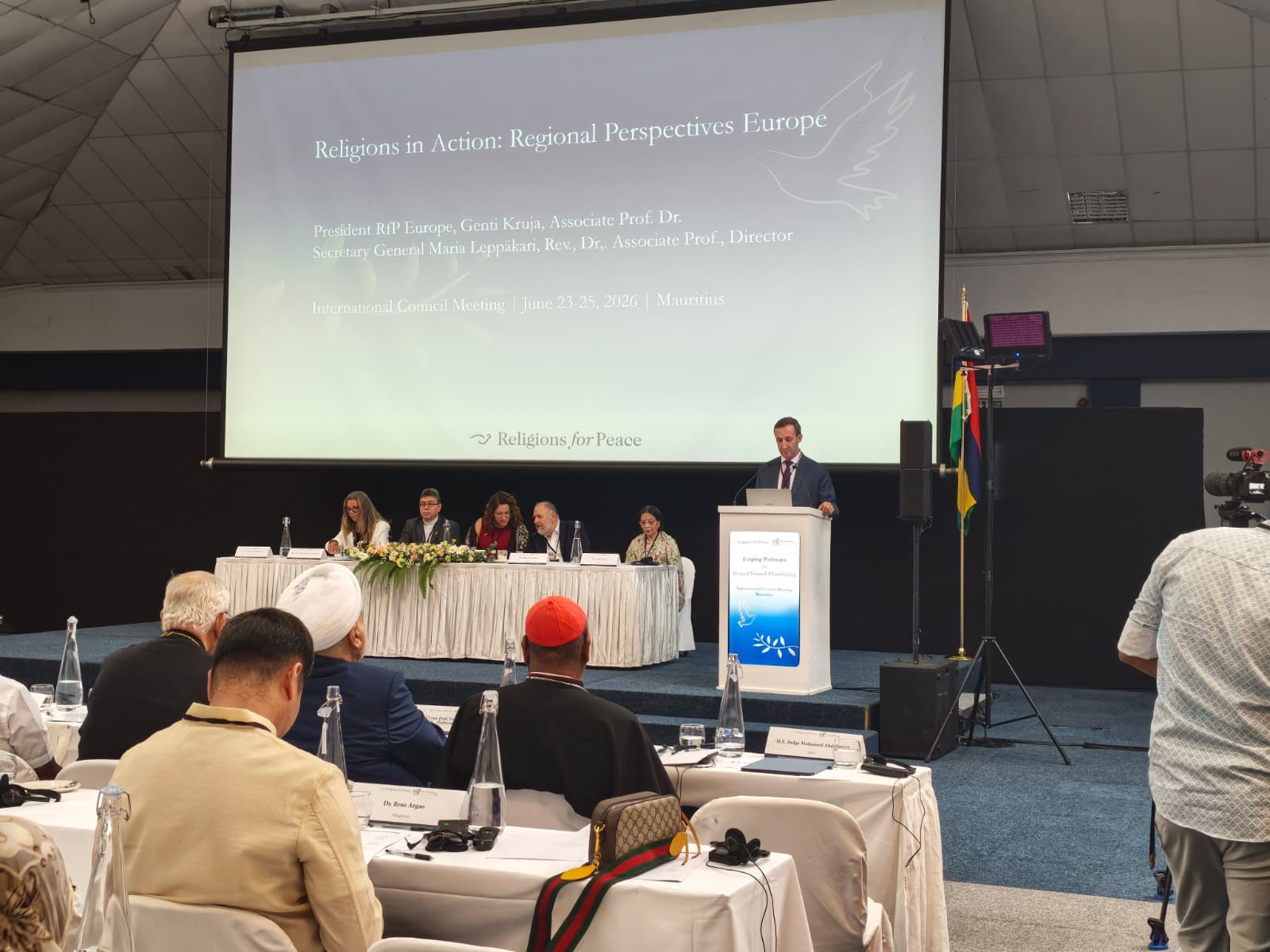
by Assoc. Prof. Dr. Genti Kruja
President, Religions for Peace Europe
Europe today stands at a critical crossroads. While our continent has long been associated with peace, democracy, and human rights, it is increasingly confronted with multiple and interconnected challenges. Yet, these challenges also provide an opportunity for faith communities to build bridges of trust, defend human dignity, and inspire hope.
Since the 10th World Assembly in Lindau, Religions for Peace Europe has undergone an important process of renewal and institutional consolidation. Guided by our shared vision and strengthened by the active engagement of our religious leaders, women, youth, and national interreligious bodies, we have continued to transform dialogue into cooperation and faith into action.
 After several years of dedicated work by the Working Group, a new Statute and Standing Rules were adopted, providing a stronger foundation for governance and future development. Today, Religions for Peace Europe has secured stability and continuity and is increasingly recognized as a credible and trusted partner in international forums, cooperation with European institutions, and global conferences.
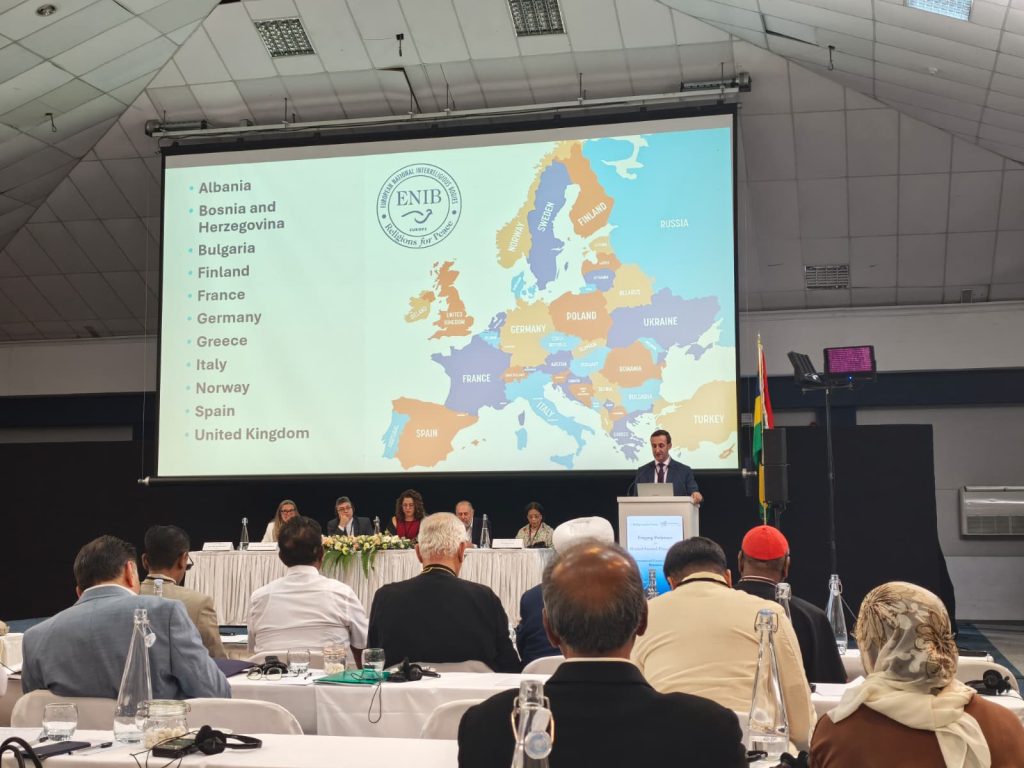
Over the past years, Religions for Peace Europe has expanded its presence and visibility through active participation in major European and international platforms, including the Council of Europe, OSCE/ODIHR, the European Parliament, the United Nations SDGs Conference, interfaith forums and conferences in Rome, Frankfurt, Tirana, Athens, Helsinki, as well as global gatherings such as the Boao Forum for Asia. Through our network of National Interreligious Bodies has also been strengthened across Albania, Bosnia and Herzegovina, Bulgaria, Finland, France, Germany, Greece, Italy, Norway, Spain, and the United Kingdom.
A key source of strength for our region is the active engagement of our four co-committees of Religions for Peace Europe, European National Interreligious Bodies with Interreligious Councils in 11 different countries of Europe, with a new chapter in Greece and reconciliation of Religions for Peace France together with the European Council of Religious Leaders, Women of Faith Network and European Interfaith Youth Network. We continue to strengthen cooperation among faith communities, promote dialogue and solidarity, and provide moral leadership in responding to contemporary challenges affecting Europe and the wider world.
The ongoing war in Ukraine, conflicts in the Middle East, geopolitical tensions, migration, demographic changes, economic inequalities, and social polarization continue to threaten social cohesion. Europe is witnessing alarming manifestations of antisemitism, Islamophobia, anti-Christian hostility, hate speech, and extremist ideologies. At the same time, climate change and environmental degradation have become pressing realities, while rapid technological developments and artificial intelligence are raising new ethical and humanitarian questions.
 Against this backdrop, the six strategic priorities of Religions for Peace provide both direction and hope.
First, Promoting Peaceful, Just and Inclusive Societies
Peacebuilding remains an urgent necessity. Religious communities have a unique responsibility to foster dialogue, reject extremism, strengthen social cohesion, and advocate for reconciliation and human dignity.
Second, Advancing Gender Equality
Despite important progress, women still face inequalities and underrepresentation in many sectors. Through the European Women of Faith Network and initiatives such as Mothers for Peace, women are increasingly recognized as leaders, mediators, and builders of peace.
Third, Nurturing a Sustainable Environment
Climate change and environmental degradation remind us that humanity shares one common home. Religious communities are called to promote environmental responsibility and sustainable lifestyles.
Through conferences and initiatives addressing desertification, climate action, and environmental challenges, and through the engagement of our youth networks, Religions for Peace Europe has encouraged interfaith cooperation for the protection of creation with different projects with German government and Erasmus + programmes between different universities, where our colleagues are involved.
Fourth, Championing Freedom of Religion or Belief and Human Dignity
Our cooperation with governments and international actors demonstrates our commitment to promoting inclusive and pluralistic societies based on mutual respect and shared values.
Fifth, Strengthening Interreligious Cooperation and Partnerships
Religions for Peace Europe has strengthened multistakeholder cooperation and expanded its engagement at local, national, European, and global levels.
The 11 Interreligious Councils represented within ENIB, together with the collective wisdom and moral authority of Religious Leaders, Women of Faith Network and Interfaith Youth Network, have become important platforms for promoting social cohesion, peacebuilding, and interreligious solidarity across the continent.
Sixth, Empowering Youth and Ethical Leadership
Through the European Interfaith Youth Network, peace education initiatives, and digital storytelling projects involving young leaders from thirteen countries, we continue investing in a culture of dialogue, responsibility, and ethical leadership.
Dear friends,
The challenges facing Europe are profound, but they also present opportunities. In a world marked by uncertainty and division, faith communities are called not only to respond to crises but also to build bridges of trust, defend human dignity, and inspire hope.
Guided by the six strategic priorities of Religions for Peace and inspired by the United Nations Sustainable Development Goals, we remain committed to transforming faith into action, dialogue into cooperation, and diversity into a source of peace and strength.
Together, as one human family, we can contribute to building a more peaceful, just, inclusive, and sustainable Europe and world.*
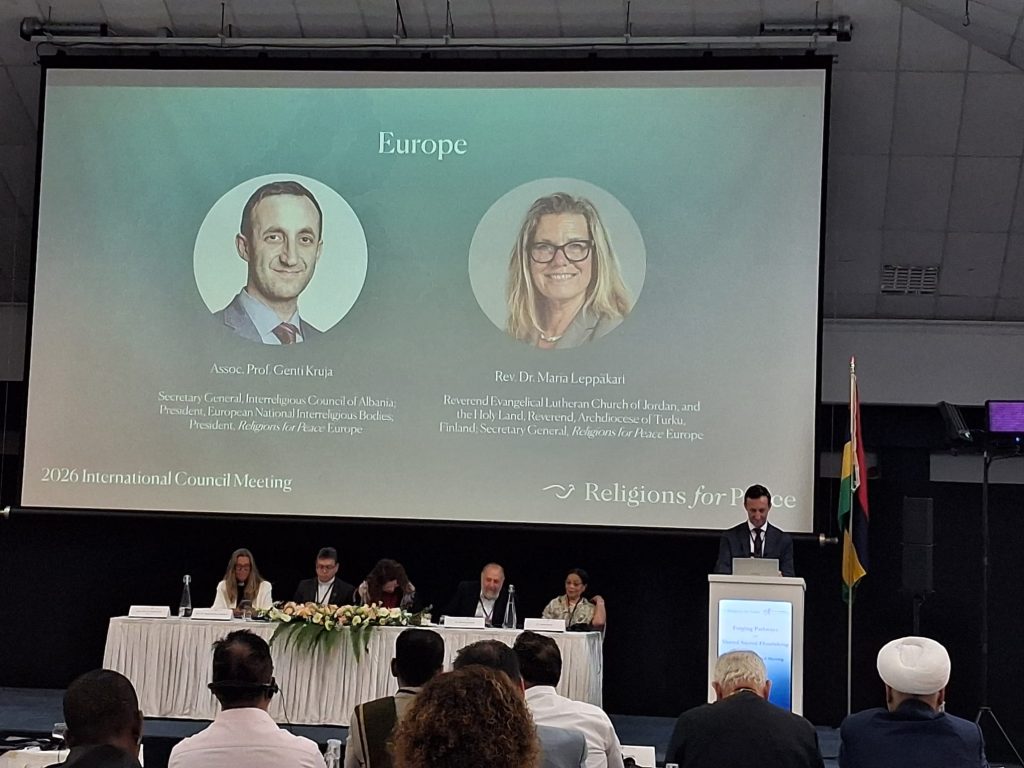
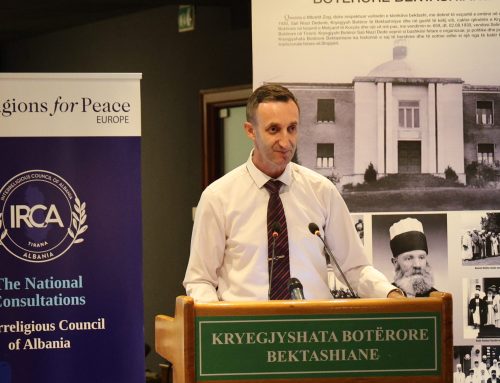
* Speech Delivered at the 2026 International Council Meeting of Religions for Peace: “Forging Pathways for Shared Sacred Flourishing” (Mauritius, 23–25 June 2026).