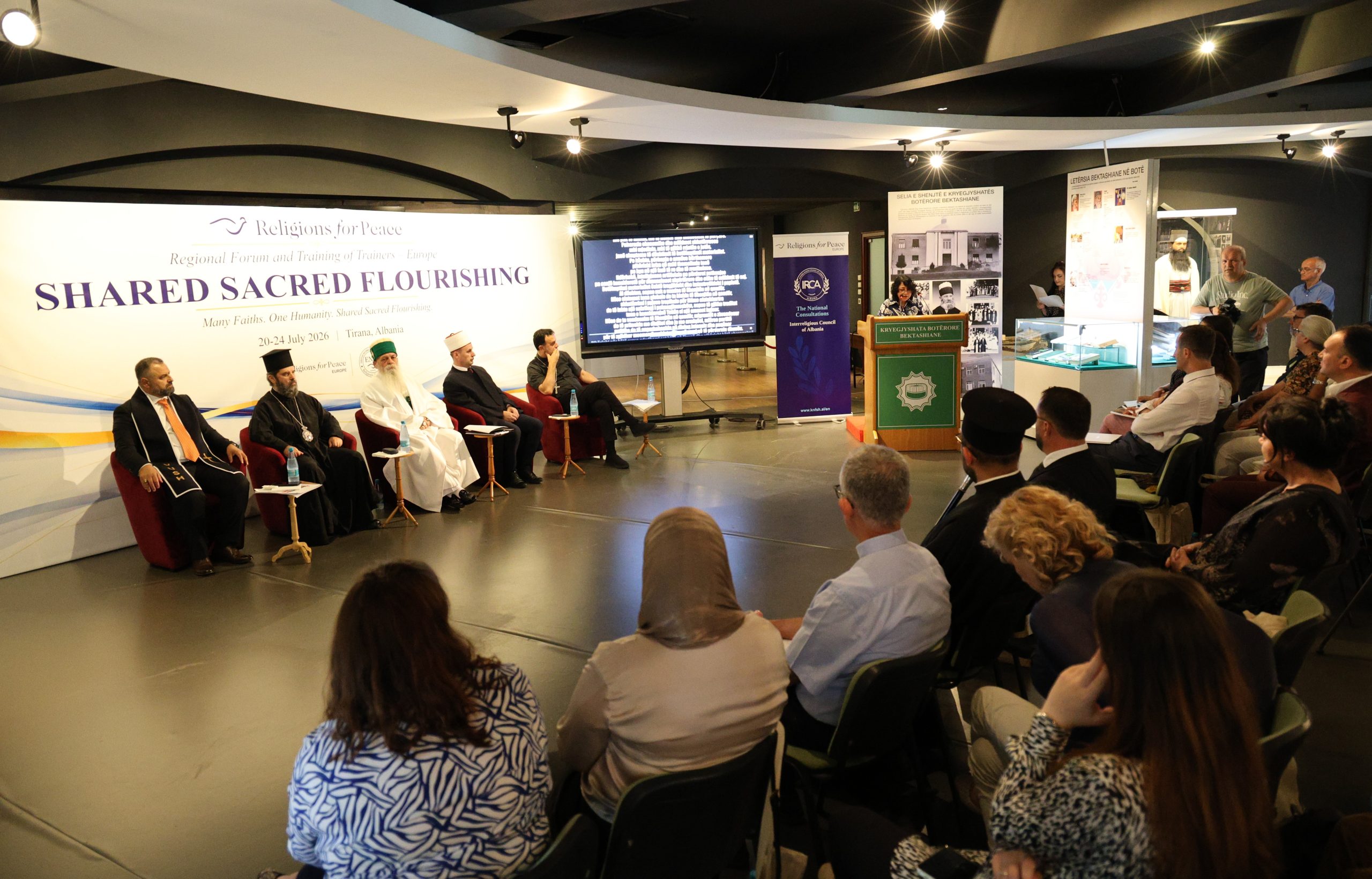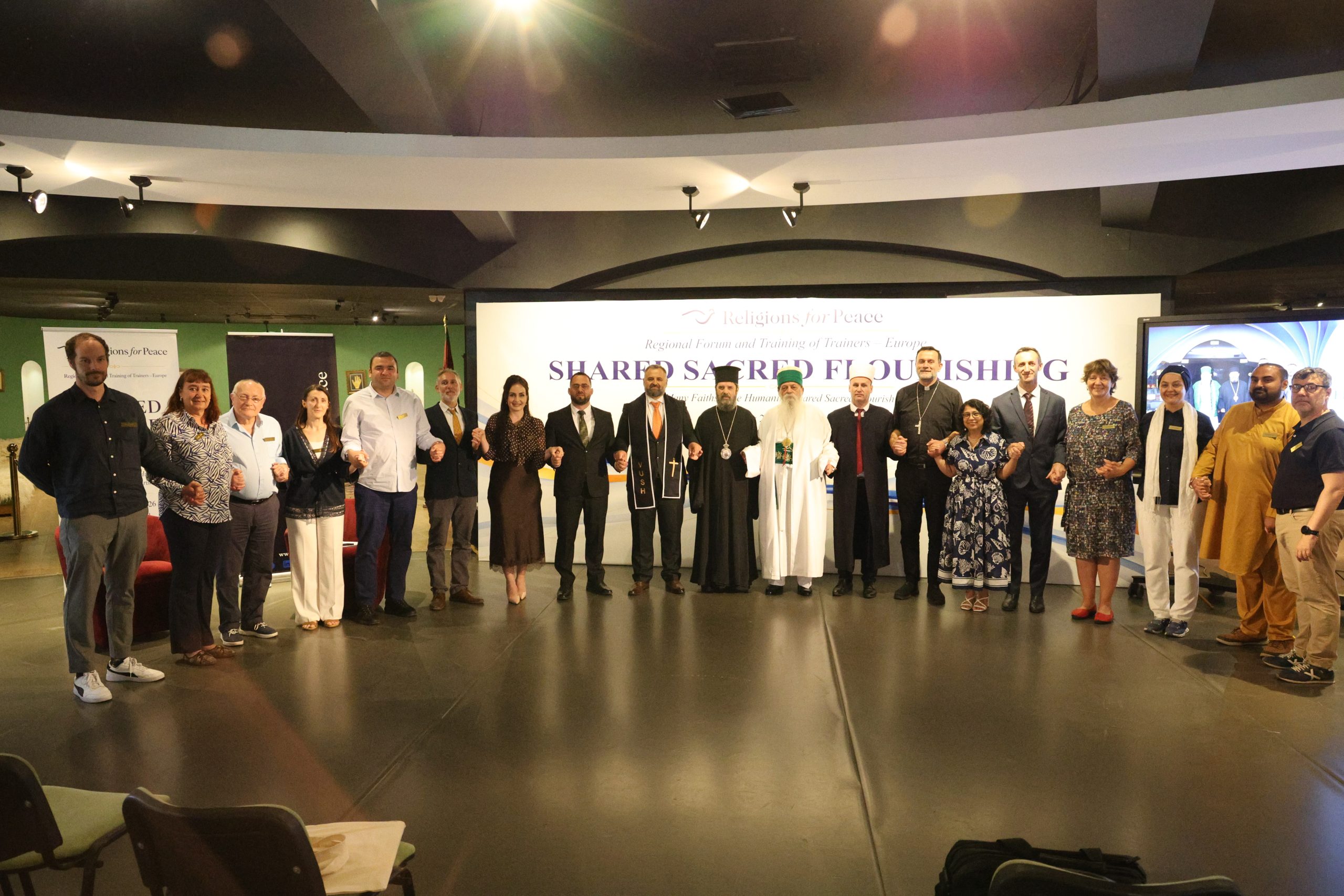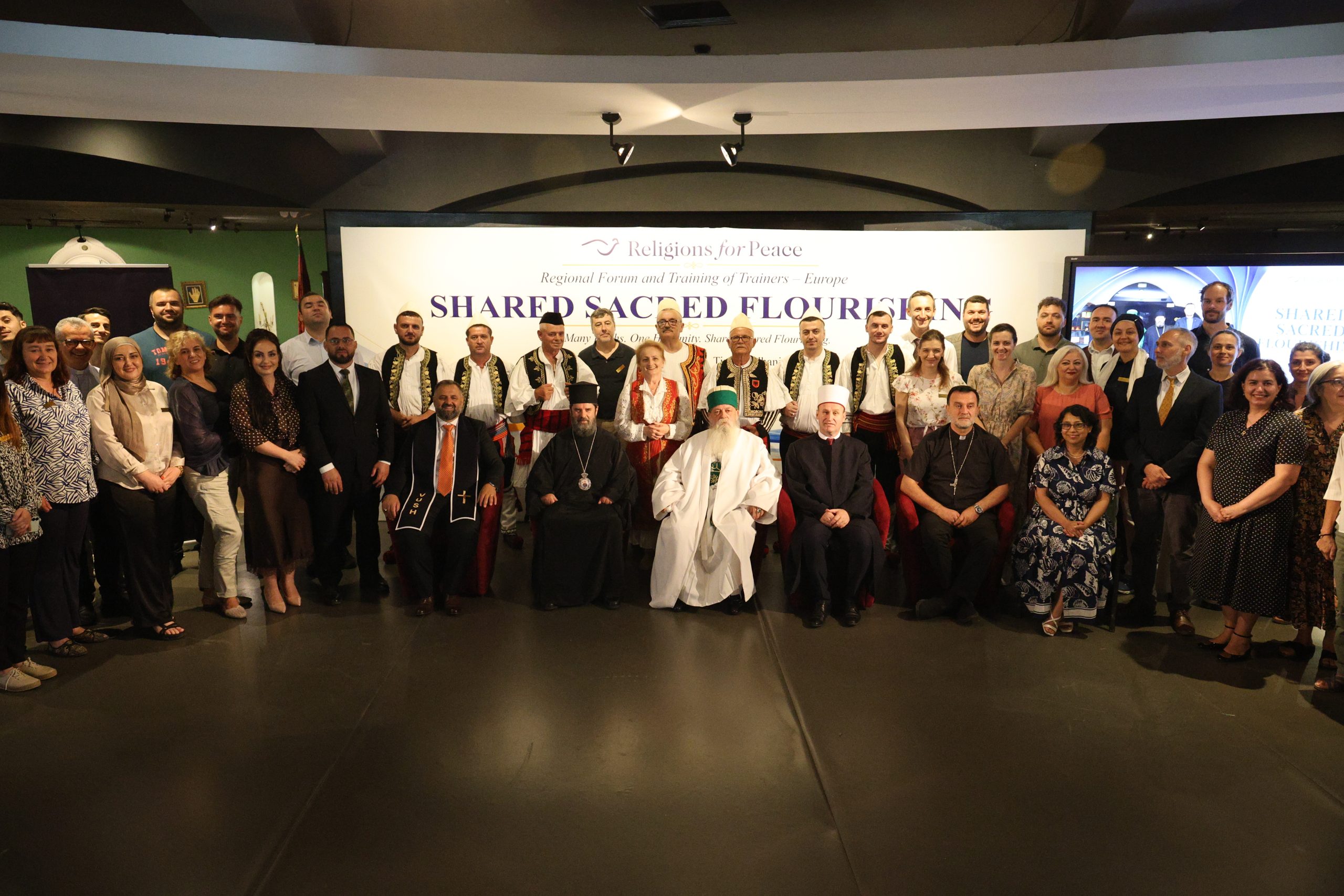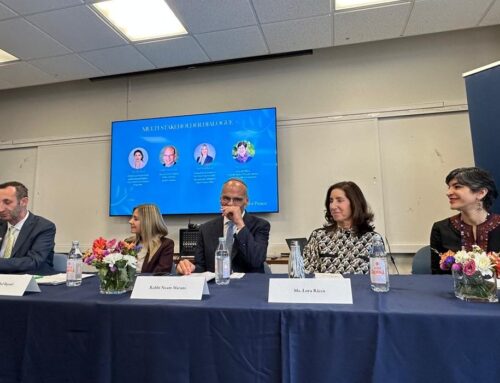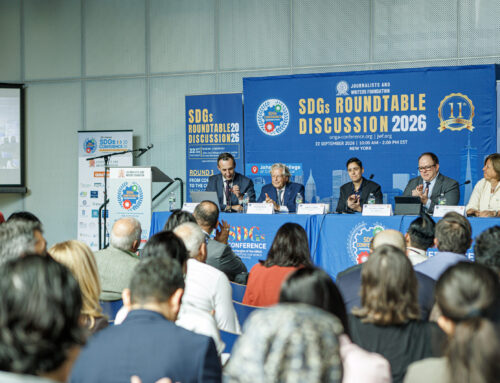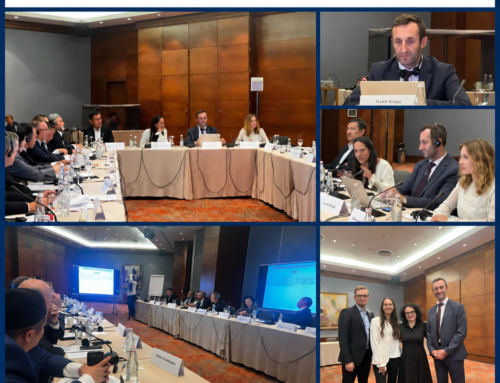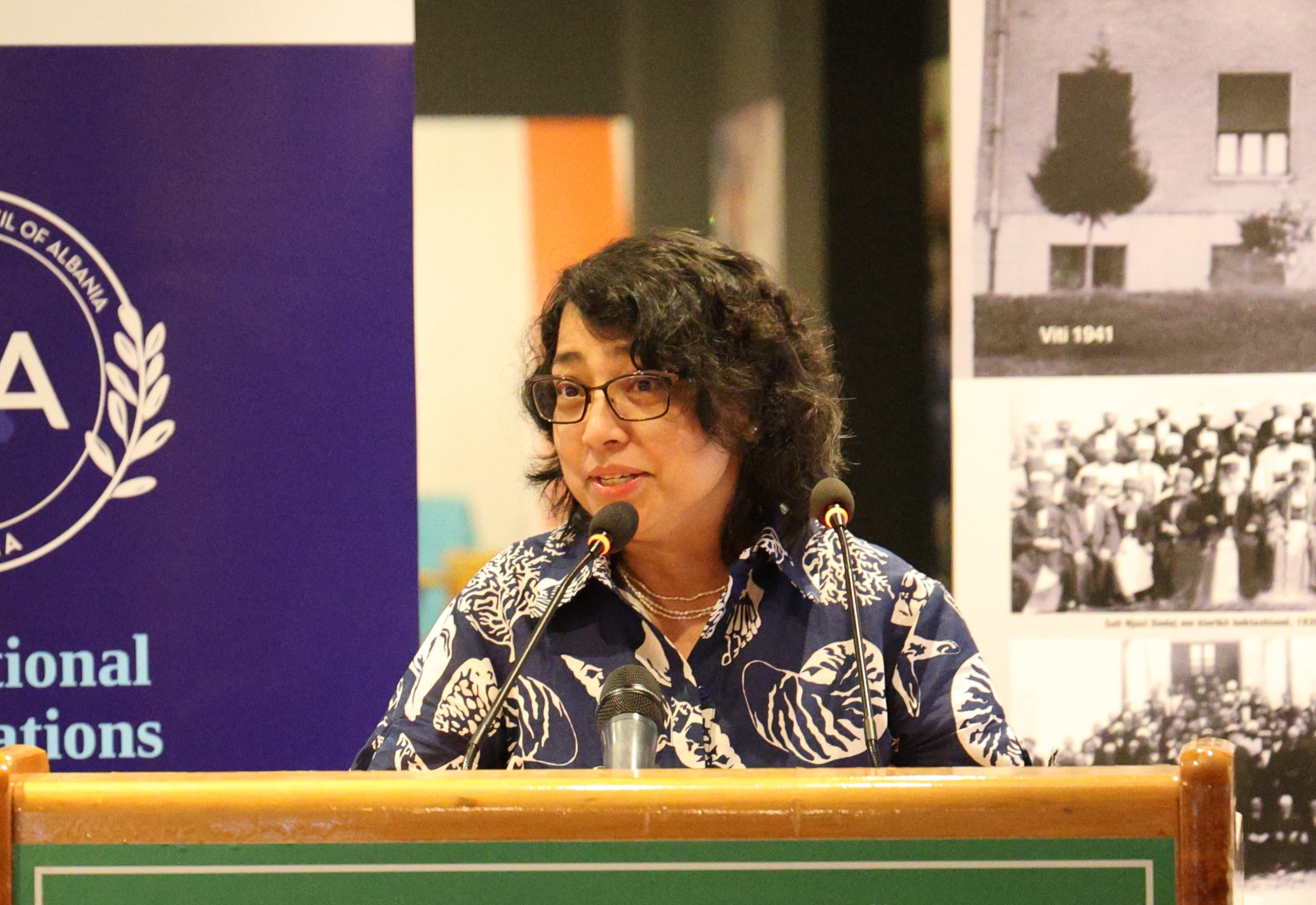
Opening Remarks by Ms. Deepika Singh, Deputy Secretary General of Religions for Peace International, at the European Interfaith Forum and Regional Multilateral Dialogue “Shared Sacred Flourishing” and the Regional Consultation & Training of Trainers (ToT) on SSF, organized by Religions for Peace Europe on 21 July 2026 in Tirana, Albania.
Warm greetings to you all. I am delighted to be here with you and in Tirana—a city that stands as a historic bridge between East and West, defined by its profound tradition of religious harmony and deep mutual respect. In a country where diverse faith communities have coexisted, protected one another, and flourished side by side for centuries, it feels uniquely appropriate that we gather here for this Regional Consultation and Training of Trainers on the Shared Sacred Worldview for Shared Sacred Flourishing.
A Shared Sacred Worldview is an inclusive spiritual perspective. It does not ask us to surrender our unique theological identities; rather, it unites our diverse faiths to recognize the divine in all people and in the planet itself. Every religion represented in this room possesses a sacred worldview and a corresponding vision of what it means for humanity to truly thrive. This worldview ensures shared sacred flourishing by bringing about inner transformation through the cultivation of virtues, the building of just and harmonious societies by common-good institutions, and care for the Earth.
For Religions for Peace, this paradigm is not a radical departure. It is the natural, mature progression of what and how we have always grounded our multi-religious cooperation and peacebuilding.
The Evolution of Our Shared Mission
To understand where we are going, we must look at the path behind us. The roots of Shared Sacred Flourishing stretch back to the very inception of Religions for Peace in 1970.
At that time, more than 300 religious leaders convened in Kyoto to deliberate on national security – as it was then framed by the imminent threat to humanity posed by nuclear weapons.
With time, we realized that national borders alone do not guarantee safety; national security had to be augmented by Human Security—protecting individual lives and dignity. In 2006, at our eighth World Assembly, we formally endorsed the concept of Shared Security—acknowledging that no one is safe until we are all safe.
Further development of our interreligious collaborations and guiding principles led to our commitments at the 2013 and 2019 World Assemblies – in Vienna and Lindau, respectively – to Shared Well-Being.
Following the Lindau Assembly, our Secretary General Emeritus, Dr. William Vendley, partnered with the Fetzer Institute to build upon these insights. Through intense consultations with our many senior religious leaders and renowned scientists, they formulated what we are discussing today and over the next two days: Shared Sacred Flourishing.
This is now the fundamental underpinning of Religions for Peace. It is not a secondary element of our work; it is the guiding force and the “tip of our spear” for achieving our long-term mission of positive peace.
You may ask: why is this training so urgent right now?
For centuries, the dominant global worldview has systematically omitted, dismissed, or ignored the Sacred in its approach to human development. The prevailing worldview is strictly materialist and reductionist. It insists that material gain is the primary driver of human affairs, that wealth equals progress, and that might makes right.
While the materialist view has yielded measurable metrics – a reduction in absolute poverty and lower rates of infant mortality for example – people around the world are qualitatively unhappier, more alienated, and deeply divided. Economic inequality and devastating impacts on the environment, the entire web of life, are symptoms of the ineffectiveness of the materialist world view.
Similarly, the proliferation of nuclear weapons—the very crisis that catalyzed our founding—is entering a dangerous new phase. And artificial intelligence is deployed with virtually no regard for the spiritual or ethical dimensions of its impact.
The materialist worldview is woefully, catastrophically incomplete. It fails because it does not center the Sacred.
If our global systems centered the Sacred, clearing rainforests for short-term profit would be an unthinkable sacrilege, because all our traditions treat the Earth as a divine trust. If we centered the Sacred, displaced migrants would be met with dignity rather than hostility, and political parties would engage in intensive, peaceful dialogue to settle their differences rather than resorting to violence.
This is precisely why we are here in Tirana, and this is what we hope to achieve through this regional consultation and training workshop:
First, we hope this will be an equipping opportunity for us all. Every government, NGO, and multilateral institution operates under a development framework. Shared Sacred Flourishing is our framework, but it is unique because it injects the Sacred into every stage—from initial analysis to field implementation. Through this workshop, we will master this formal approach so we can identify the deeper, spiritual “problems behind the problems.”
Second, we are here to build a network of trainers. You are not just participants; you are the ambassadors who will carry this methodology back to your respective interreligious councils, communities, and nations. This workshop is designed to give you the practical skills, vocabulary, and tools to train others, scaling this model across the region.
Third, we are here to translate shared values into structural action. We must leverage our collective moral authority to rejuvenate the timeless values of compassion, empathy, love, honesty, and integrity. We are here to show the secular world that their development efforts are not enough because they have left out the most vital feature of human society.
Thank you for your dedication, your shared faith, and your commitment to one another. Let us utilize these next few days to transform our shared sacred worldview into a practical reality for the communities we serve.
Thank you!