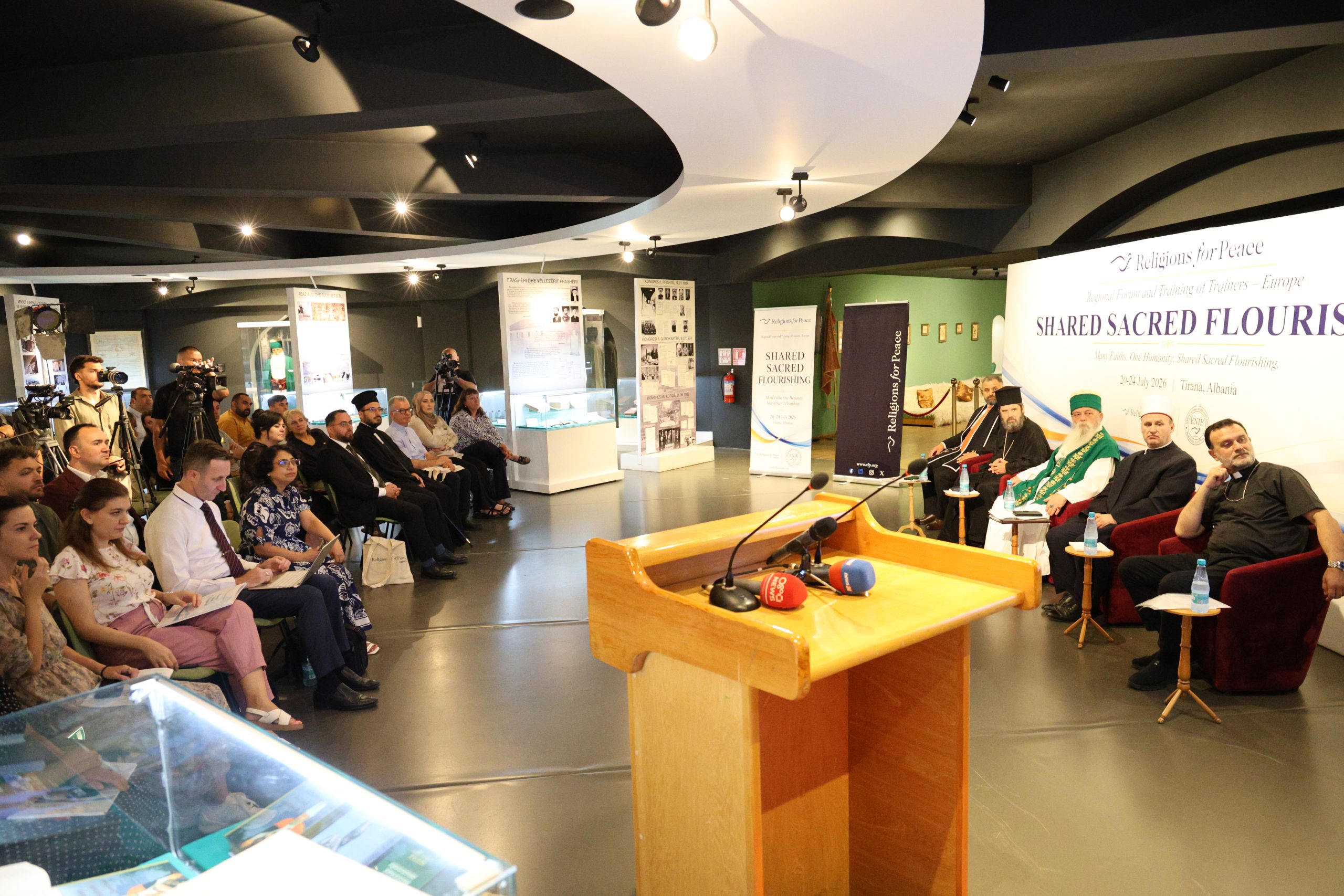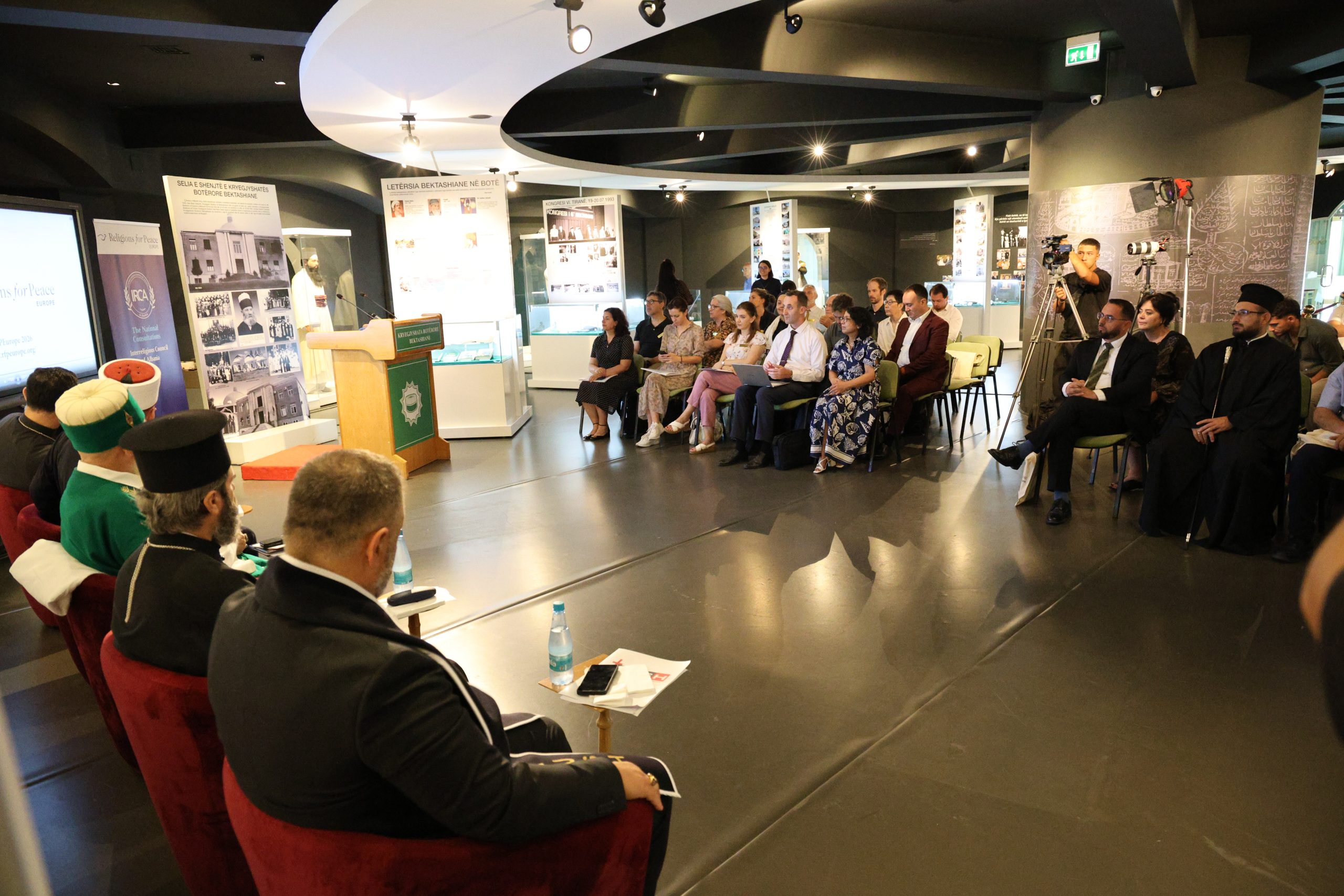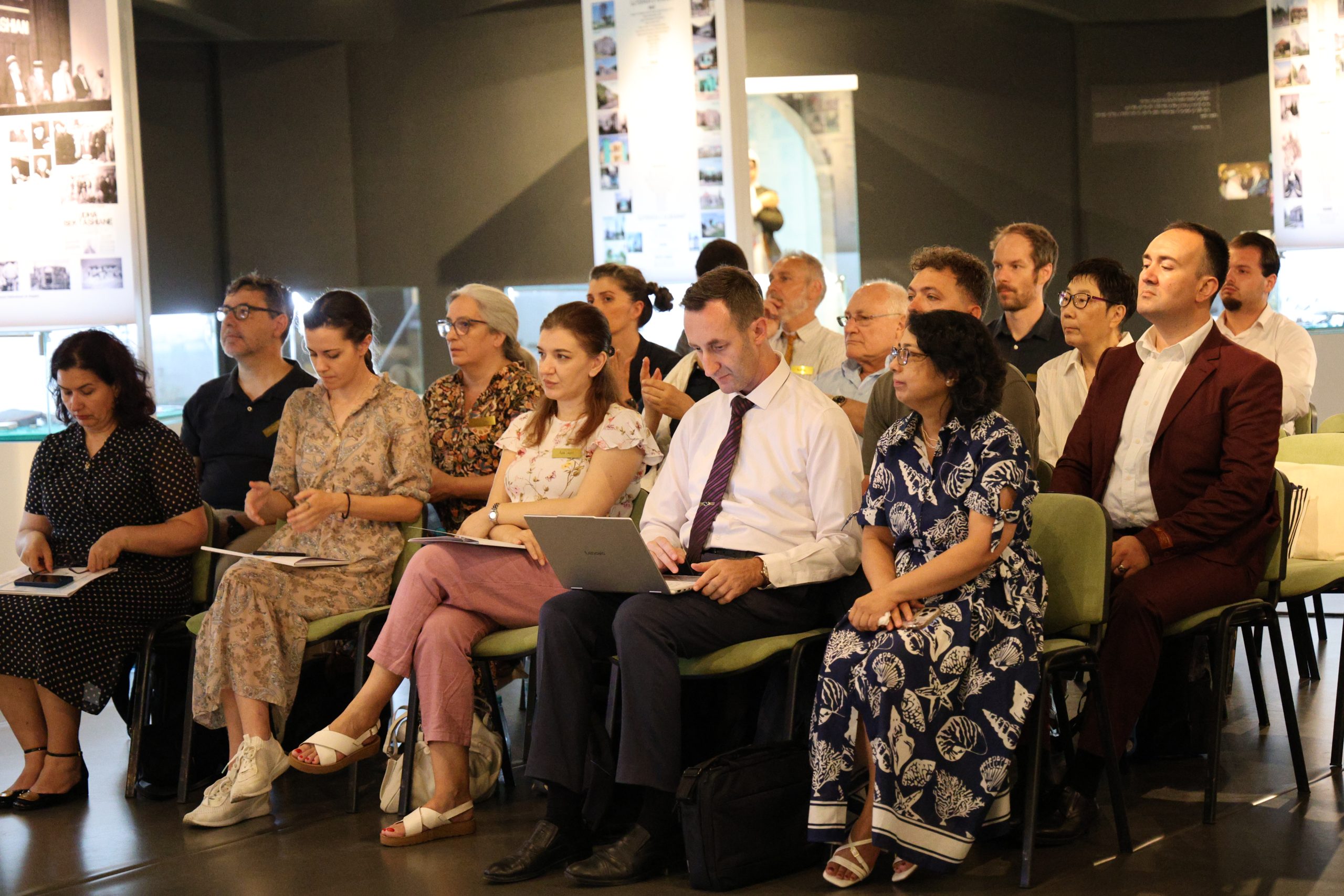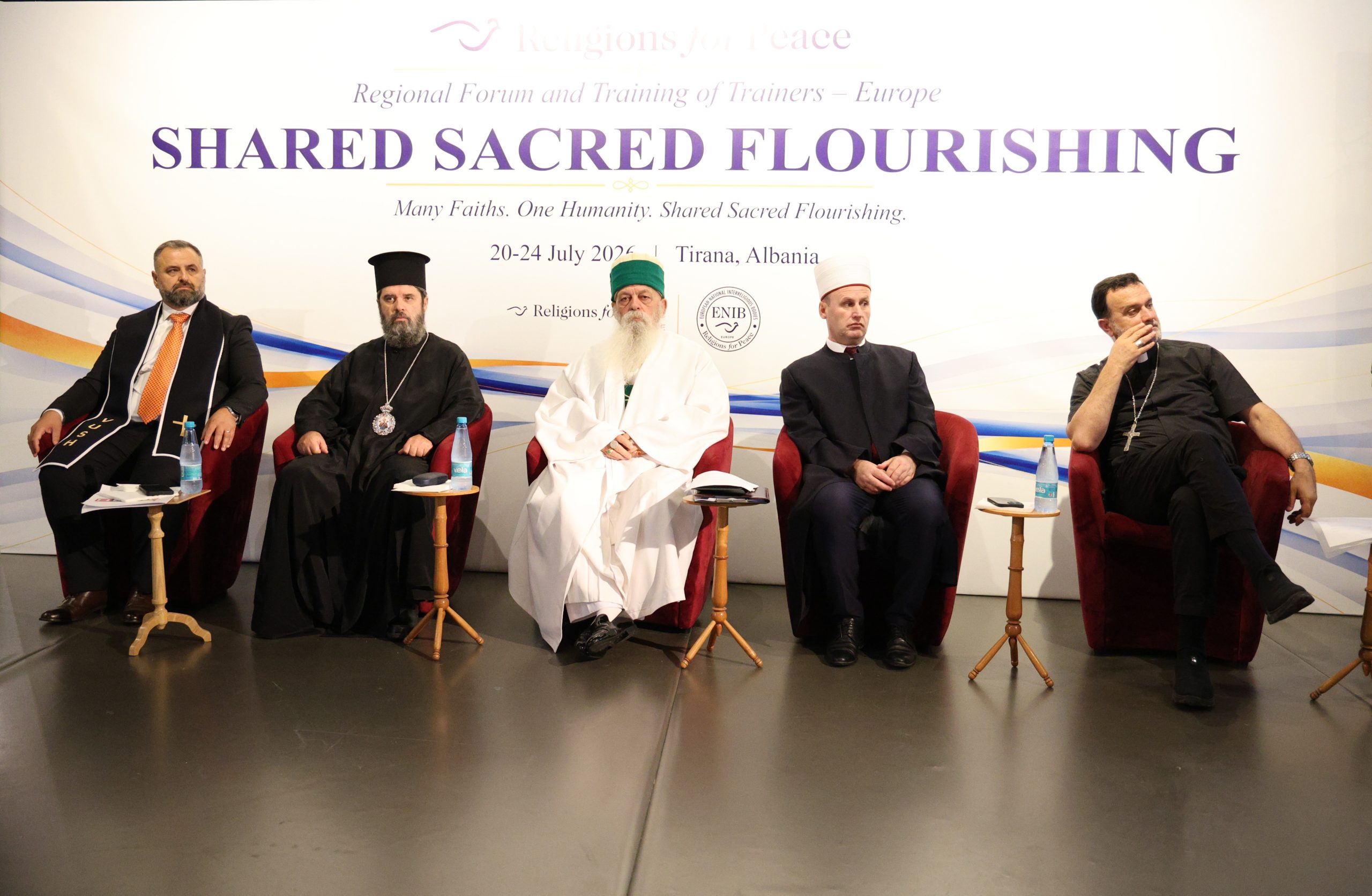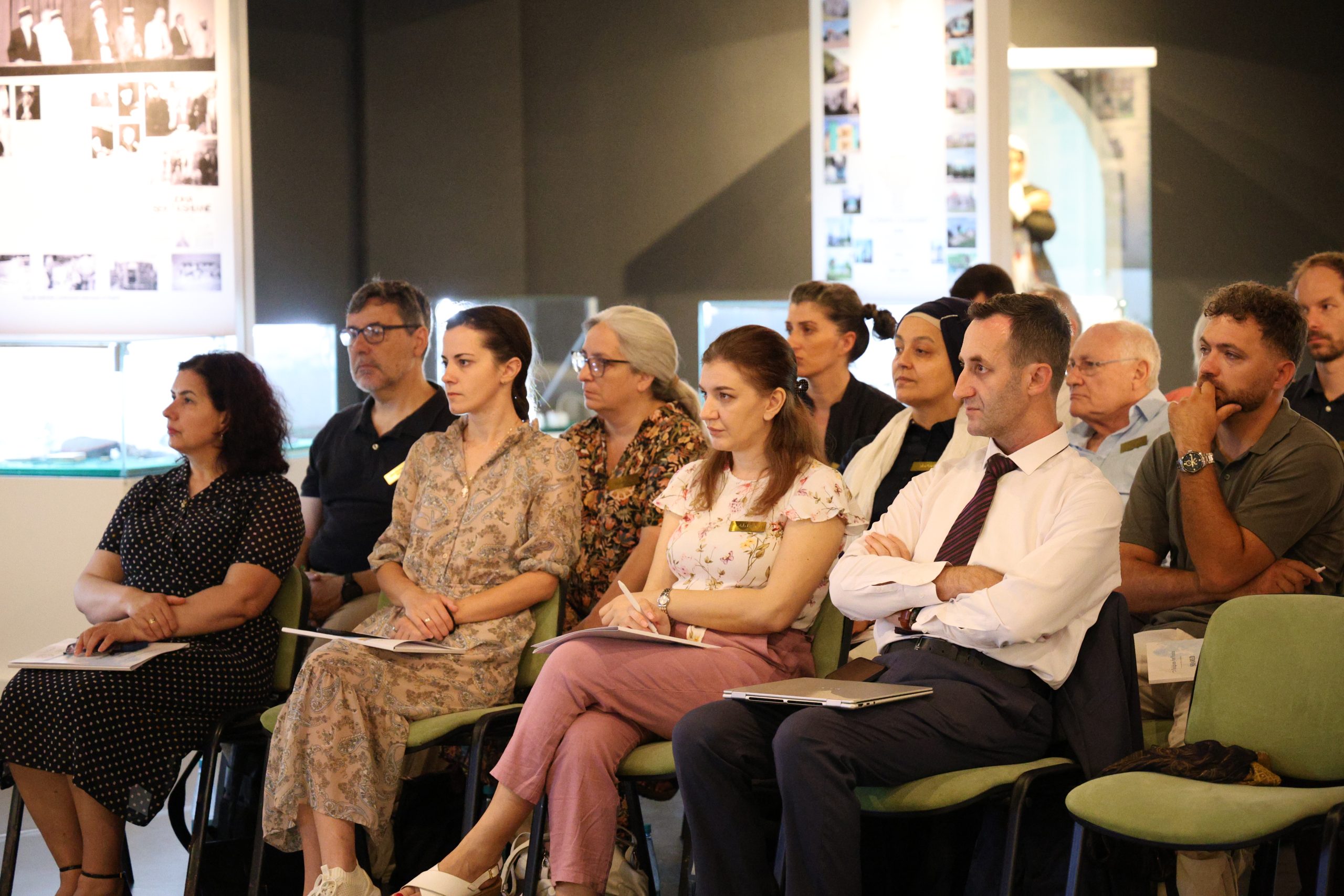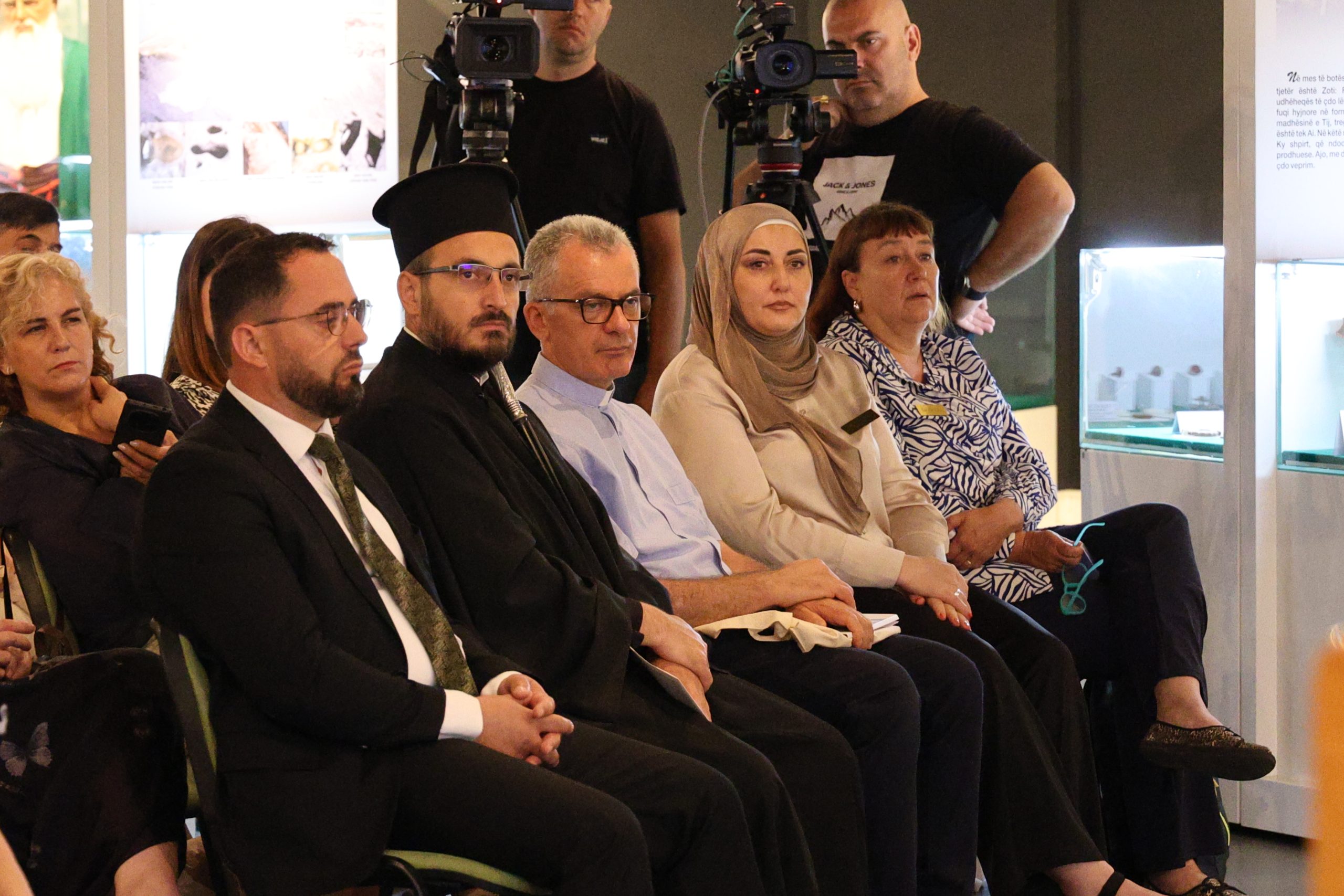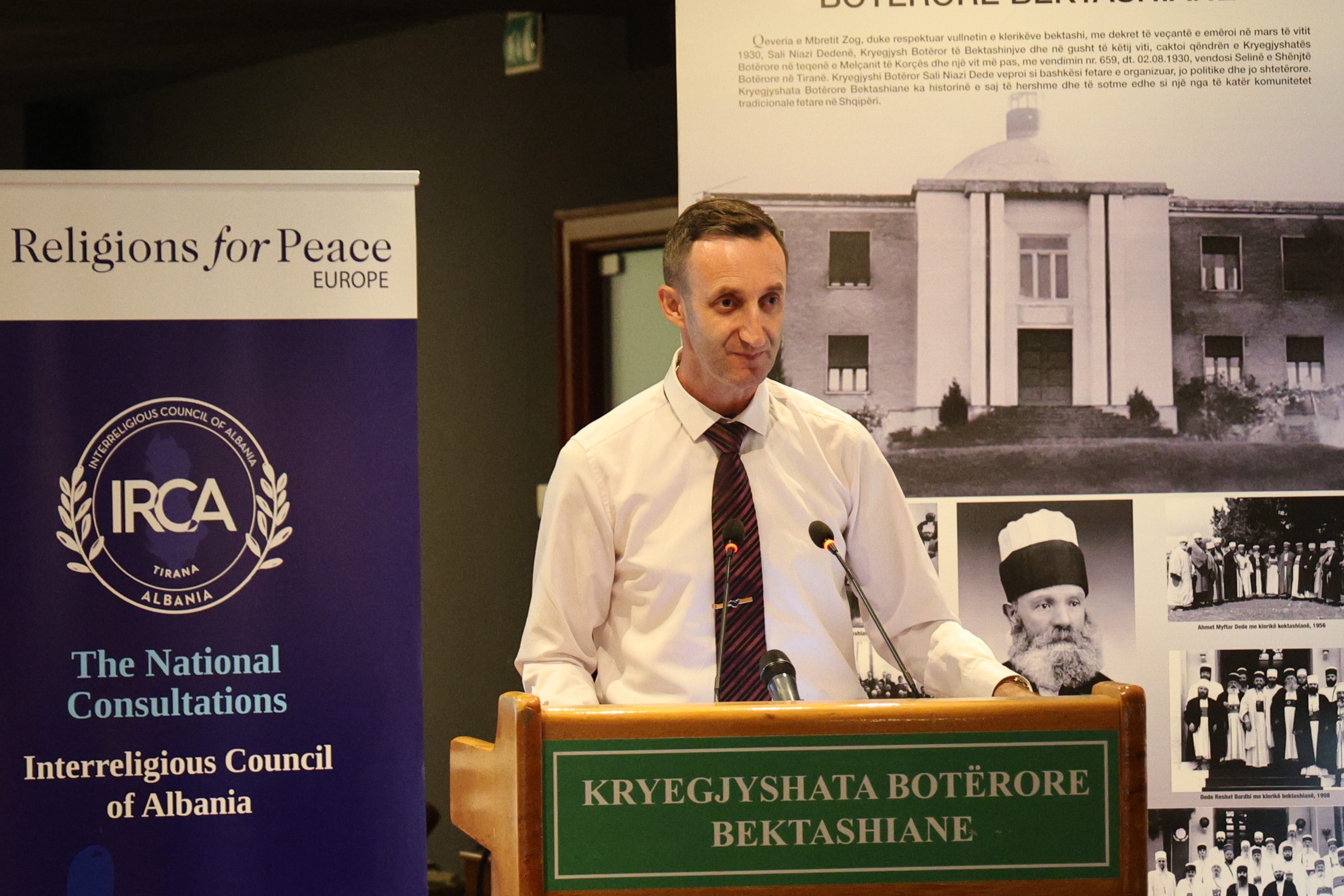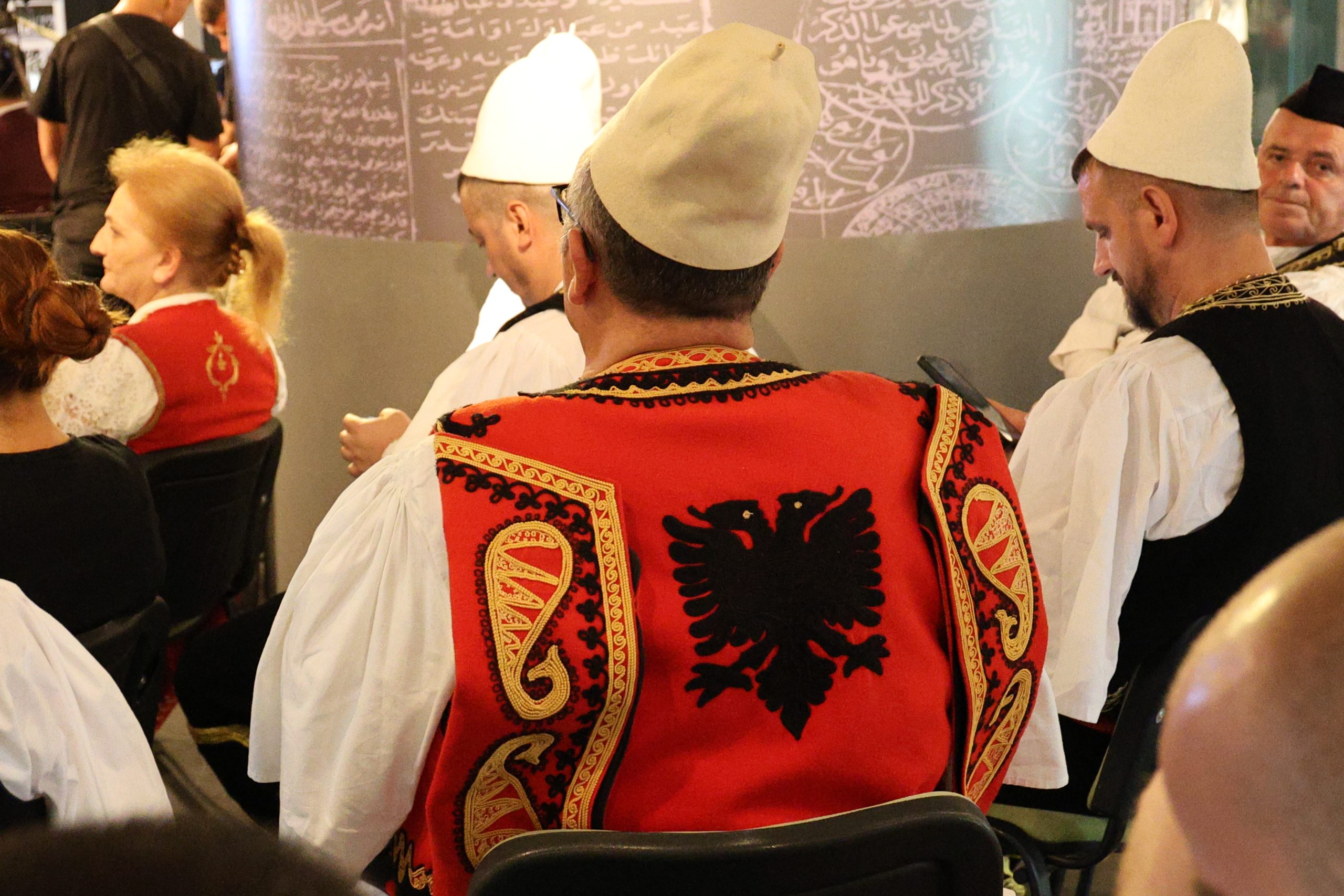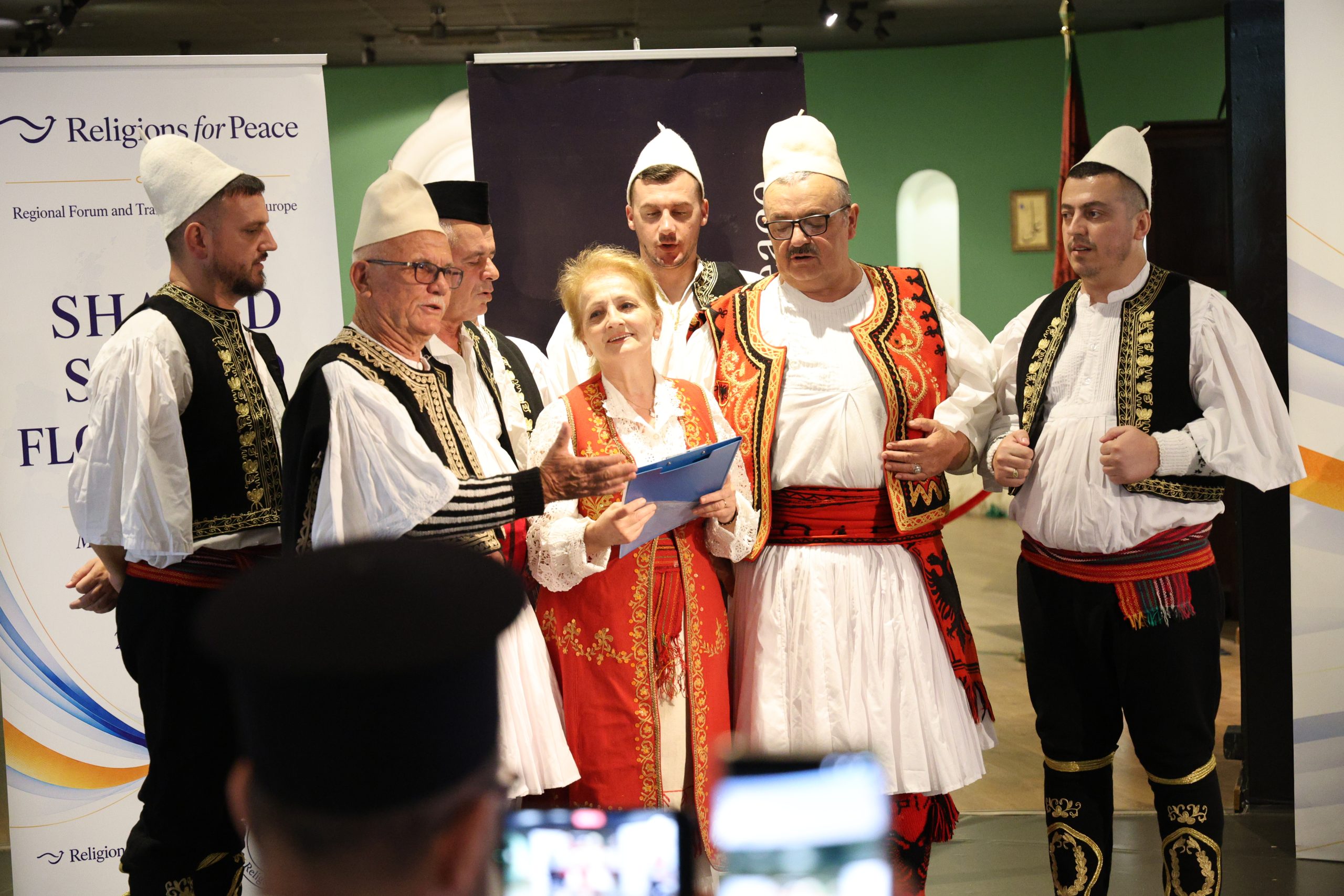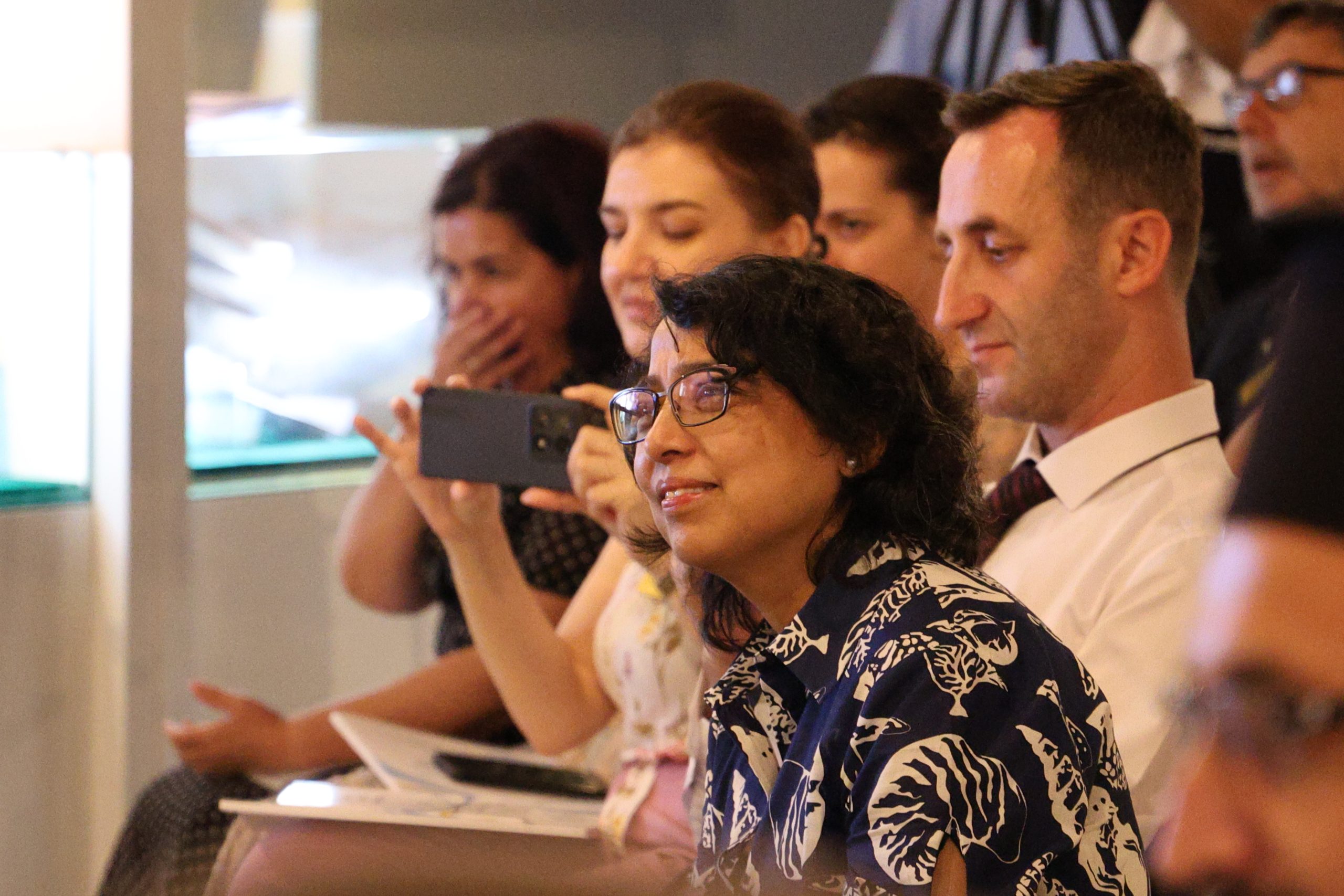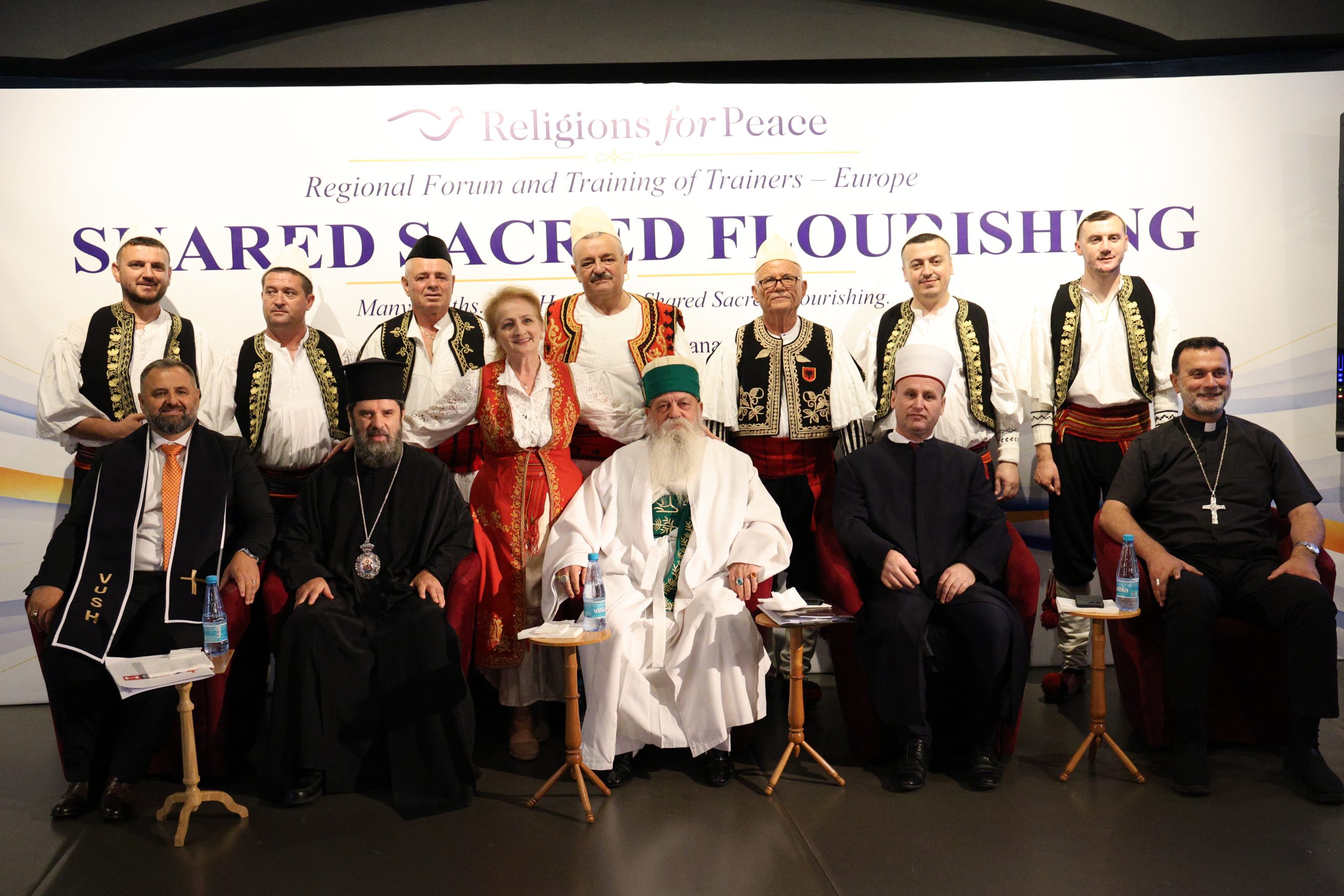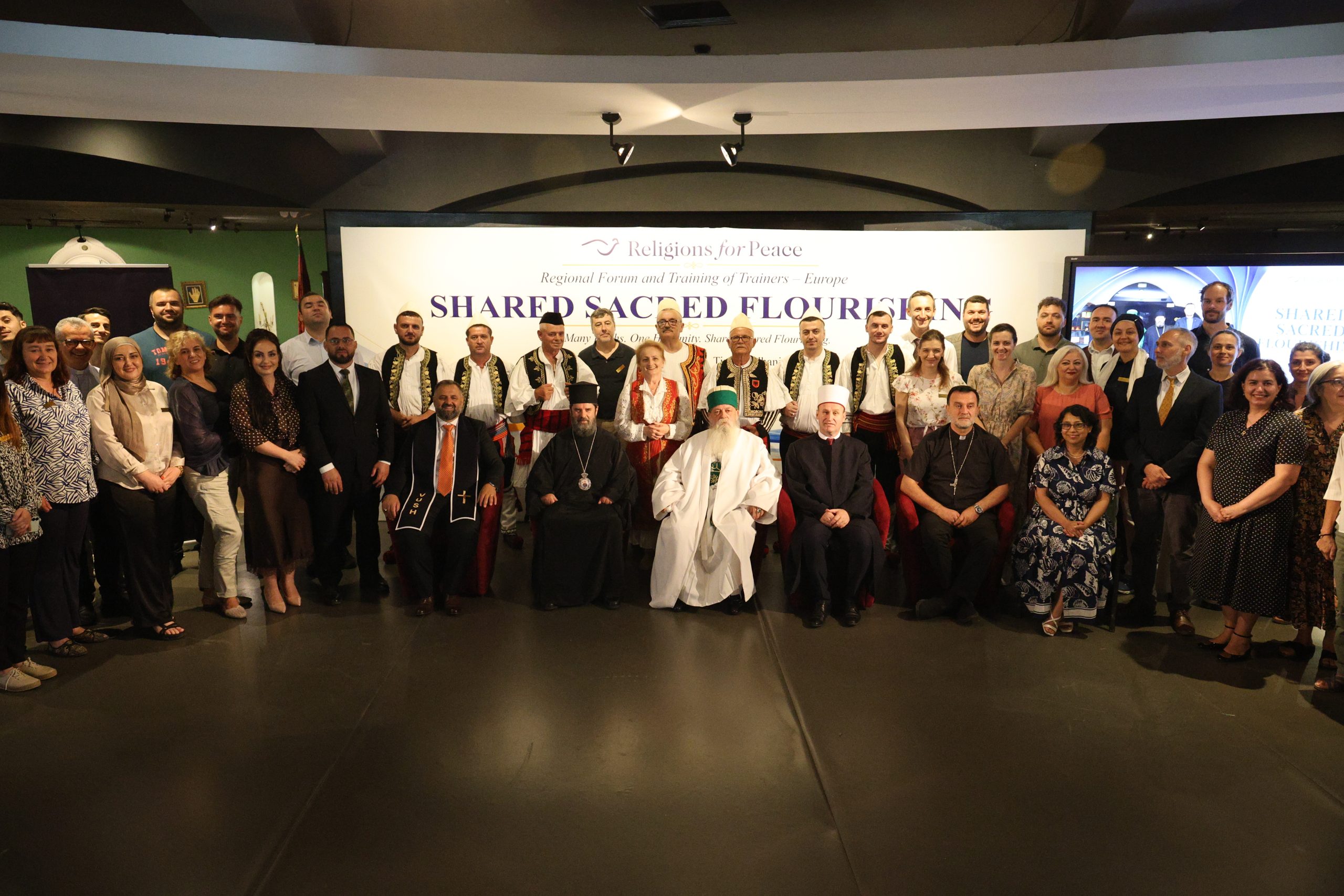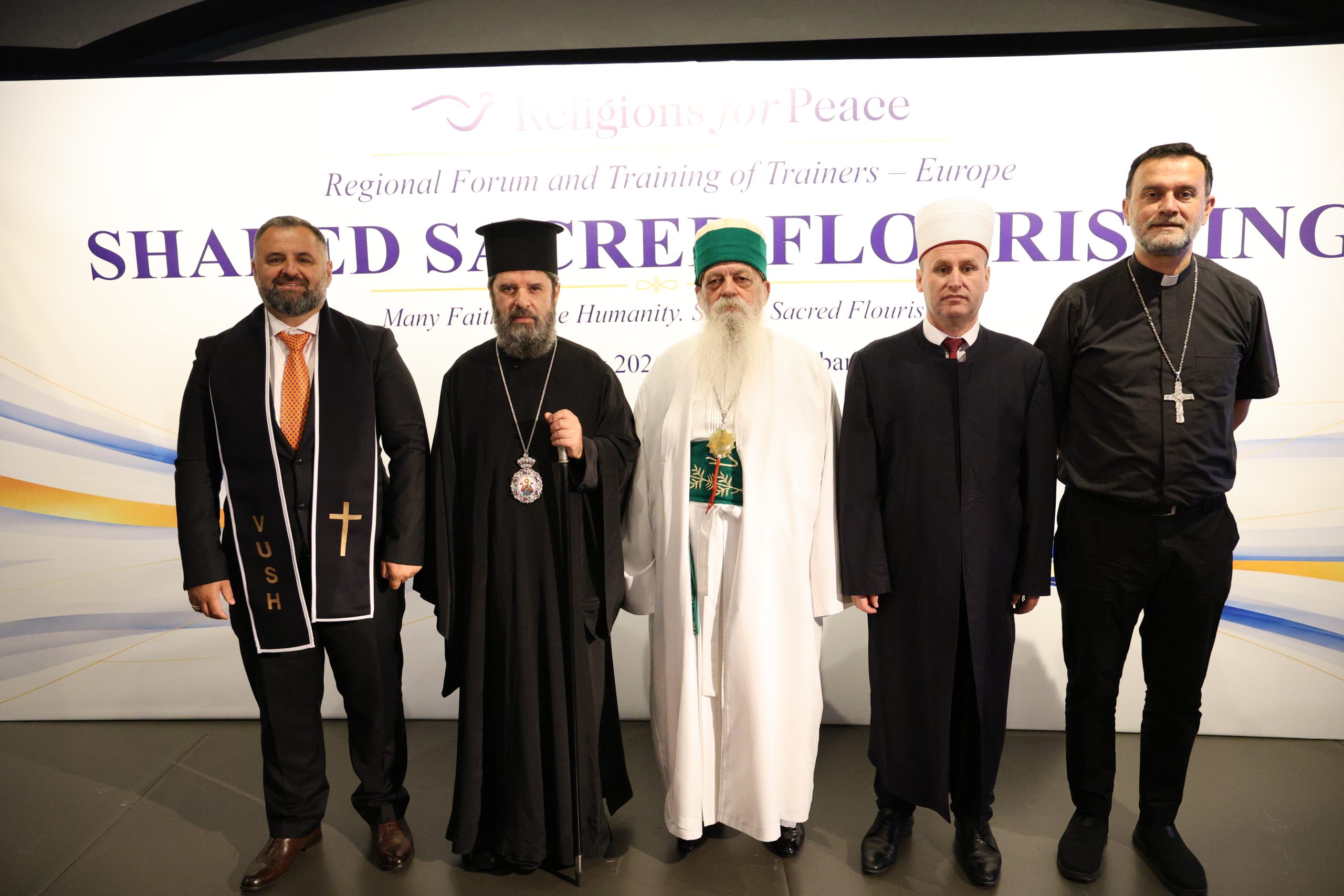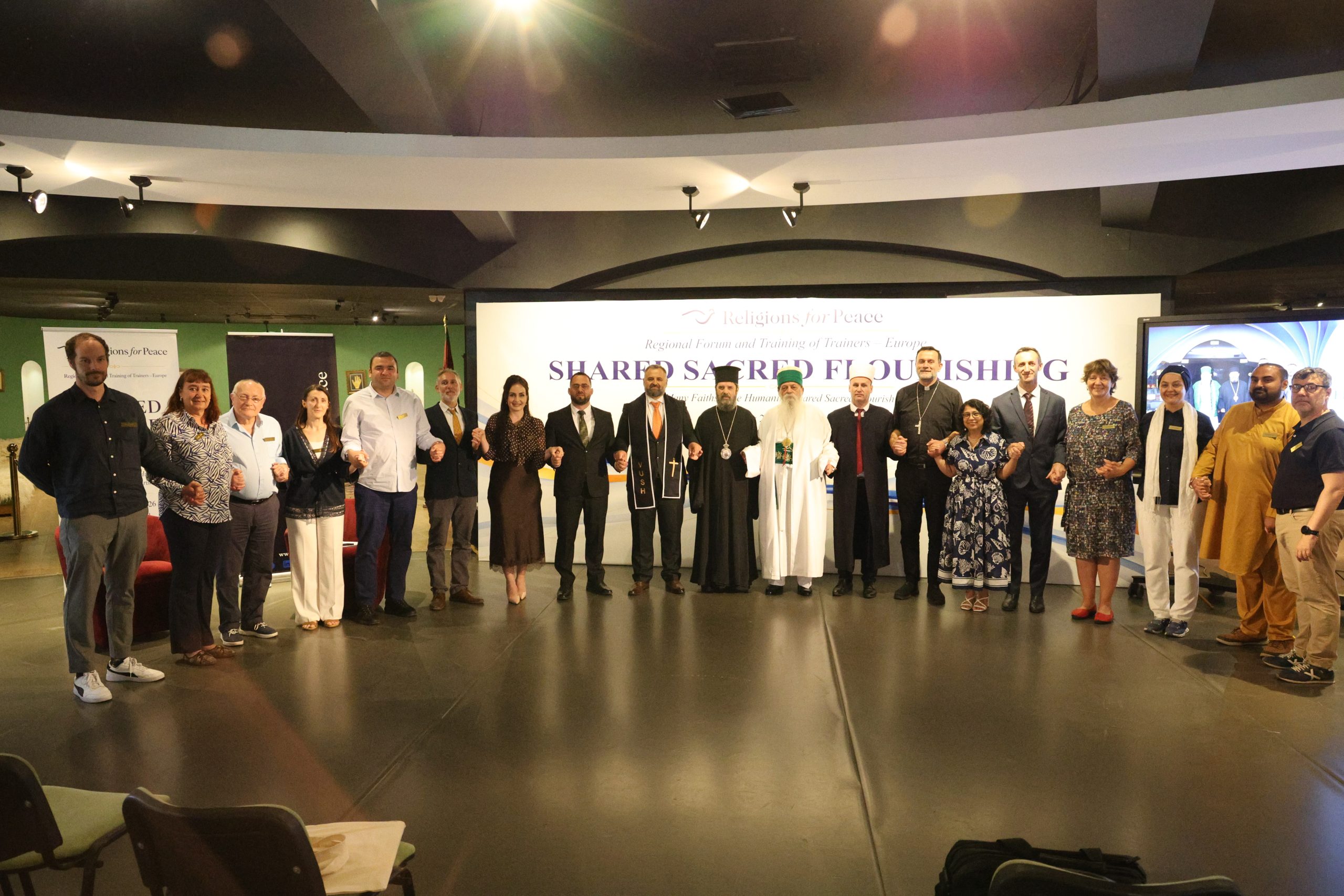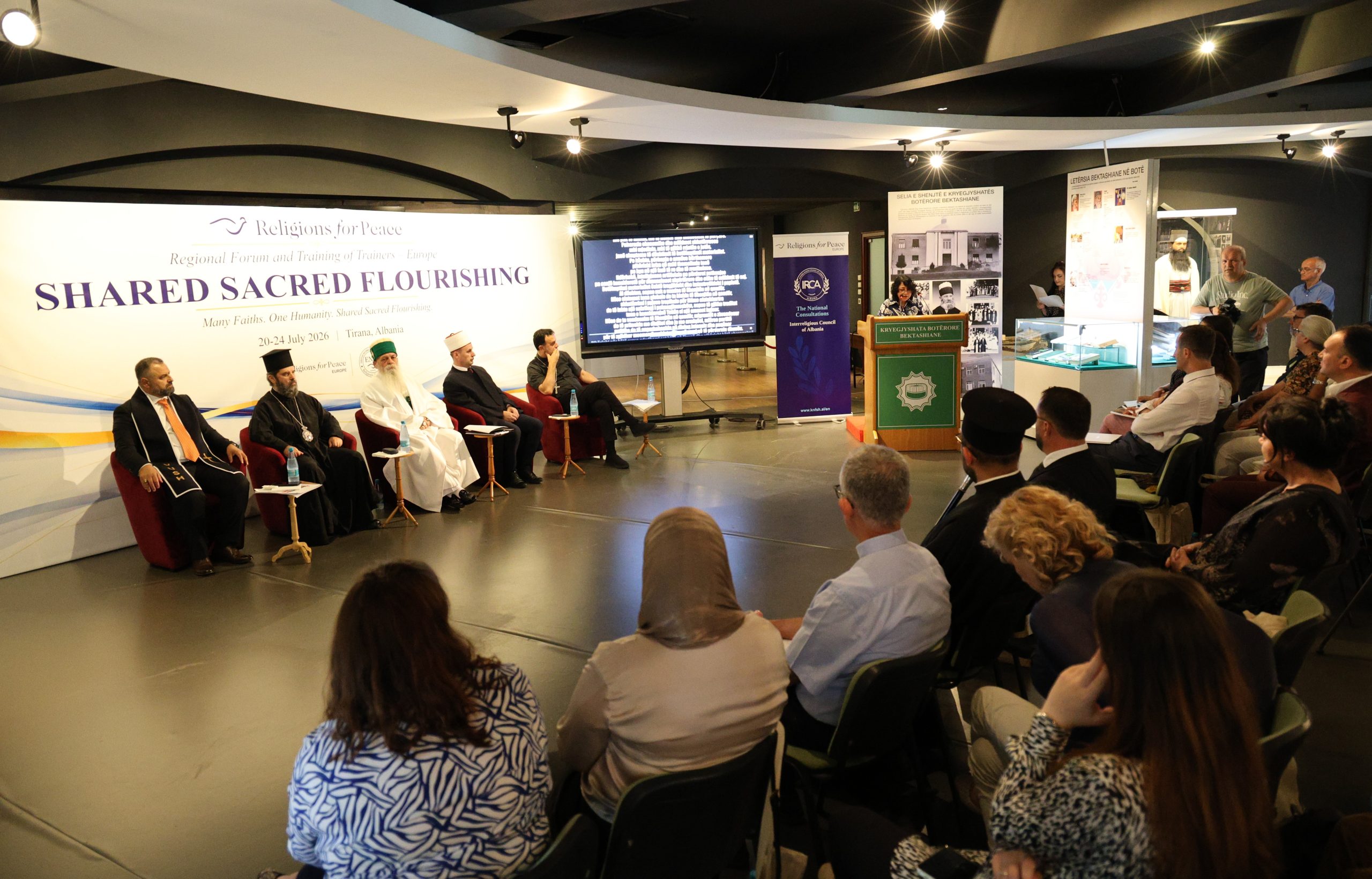
Tirana, 21 July 2026 – Representatives of interreligious councils, faith communities, public institutions, academia, and civil society from seven European countries gathered in Tirana for the European Interfaith Forum and Regional Multistakeholder Dialogue on “Shared Sacred Flourishing.”
The Forum was held at the Museum Hall of the Bektashi World Headquarters and was organized by Religions for Peace International, European National Interreligious Bodies – ENIB, Religions for Peace Europe, in cooperation with the Interreligious Council of Albania – Religions for Peace Albania, religious communities, national and local partners.
Participants from European Council of Religious Leaders, and Religions for Peace from Albania, Bosnia and Herzegovina, Finland, Germany, Greece, Italy, and Spain came together to strengthen interreligious cooperation and to translate dialogue into practical action in support of peace, human dignity, social justice, and care for the environment.
The opening session featured remarks by Deepika Singh, Deputy Secretary General of Religions for Peace International; H. Dede Edmond Brahimaj, Chair of the Interreligious Council of Albania and World Leader of the Bektashi Order; H. Bujar Spahiu, Chair of the Muslim Community of Albania; His Beatitude Joan, Archbishop of Tirana, Durrës and All Albania; Mons. Gjergj Meta, President of the Episcopal Conference of Albania; Pastor Erion Sylari, Chair of the Evangelical Alliance of Albania; Klodjan Bulku, Chairman of the State Committee on Cults; and Assoc. Prof. Dr. Genti Kruja, President of Religions for Peace Europe and Secretary General of the Interreligious Council of Albania.
In his welcoming remarks, H. Dede Edmond Brahimaj described Albania as a country where interreligious harmony is not simply an aspiration, but a living tradition passed down through generations. He stressed that, although faith traditions may differ, they are united by shared sacred values such as peace, justice, compassion, human dignity, and service to humanity. He noted that the Forum was not merely a series of lectures or discussions, but a shared journey from understanding sacred traditions to taking meaningful action.
H. Bujar Spahiu emphasized that genuine human development cannot be measured by material well-being alone, because the human person is both body and soul. He underlined that interreligious dialogue does not require people to abandon their beliefs, but rather to live their faith sincerely while respecting the freedom and dignity of others. His remarks also highlighted the need to invest in young people, promote social justice, protect the environment, and develop joint initiatives that serve people regardless of religion or nationality.
His Beatitude Joan stated that the presence of representatives of different religious traditions in one space is public proof that people can remain faithful to their own spiritual identity while approaching others with respect, understanding, and love. Recalling the legacy of the late Archbishop Anastas and his reflection on the “search for the Sacred,” he stressed that the name of God must never be used to justify hatred, violence, or the humiliation of another human being.
Mons. Gjergj Meta reflected on human dignity as rooted in the presence of the Sacred within every person. He also highlighted humanity’s responsibility to protect both the human person and creation, calling for renewed commitment to justice and peace. He stressed that religious communities must remain a visible and credible witness to the Sacred in society, despite the challenges and divisions of the present time.
From the Evangelical Christian tradition, Pastor Erion Sylari emphasized that every human being possesses inherent and inalienable dignity, which is not determined by nationality, religion, economic status, or political convictions. He noted that faith must be demonstrated not only through words, but also through care for families in need, education of young people, protection of creation, and the building of bridges of understanding. He encouraged young people to see respect for others not as a weakening of religious identity, but as an expression of faith through love, kindness, and service.
Klodjan Bulku, Chairman of the State Committee on Cults, described interreligious coexistence as one of the most precious values of Albanian society and as a legacy that has now gained recognition beyond the country’s borders. He reaffirmed the commitment of public institutions to supporting initiatives that strengthen interreligious dialogue, freedom of belief, and mutual respect.
Assoc. Prof. Dr. Genti Kruja, President of Religions for Peace Europe, highlighted the organization’s guiding principle: “Different Faiths – Common Action.” He clarified that Shared Sacred Flourishing does not seek to create a new religion, blend traditions, or reduce them to a lowest common denominator. Rather, it provides a respectful space where people of different faiths can stand together without abandoning their identities.
He stressed that Europe needs religious communities that engage constructively in public life, leaders who speak clearly against hatred, violence, and discrimination, and women and young people who are not only participants, but leaders, trainers, and decision-makers. He called for the Tirana gathering to help move Europe “from coexistence to cooperation, from dialogue to shared service, and from fragmented initiatives to coordinated action.”
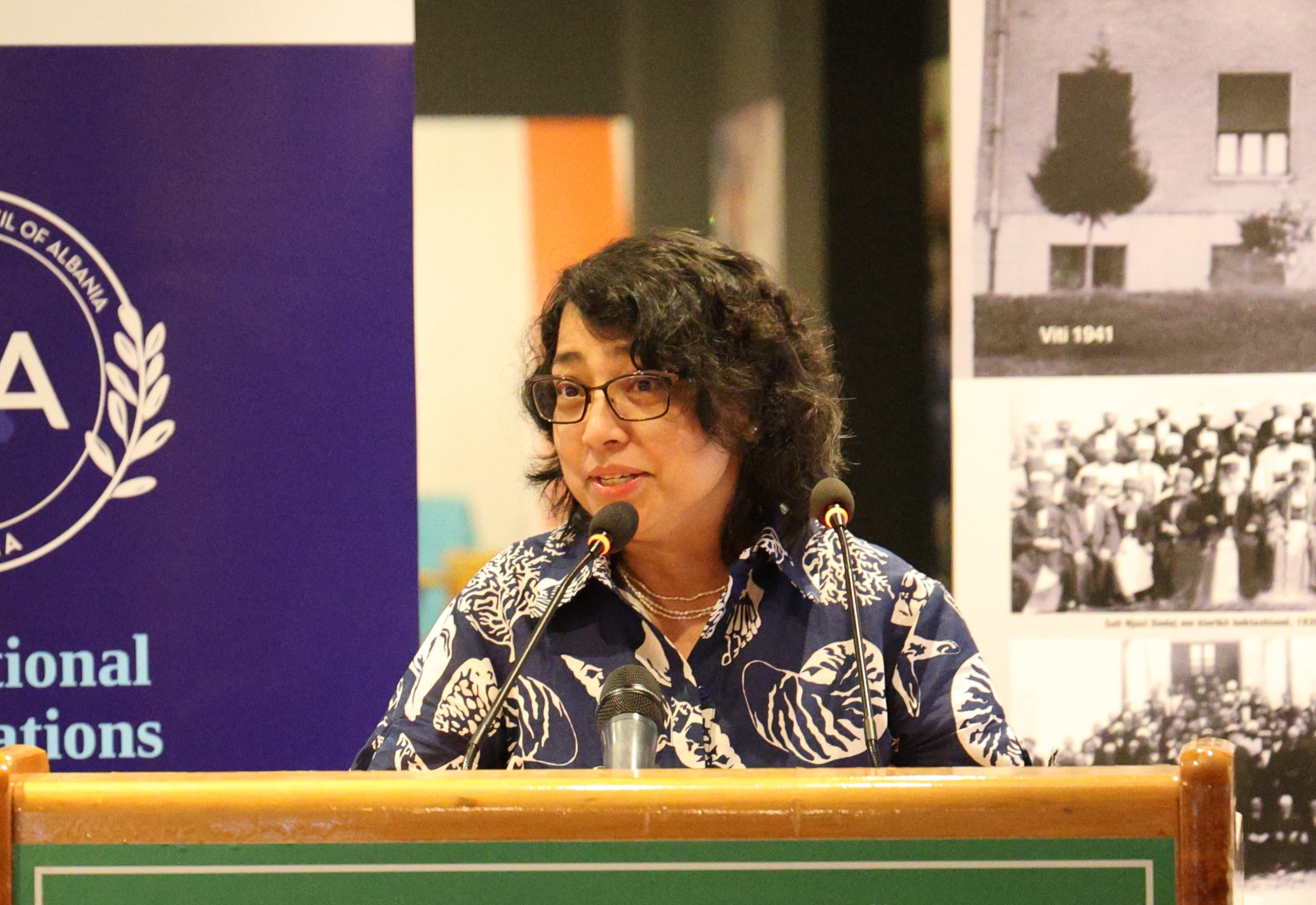
In her remarks, Deepika Singh described Tirana as a historic bridge between East and West and as a particularly fitting place for the regional consultation and training. She explained that a Shared Sacred Worldview is an inclusive spiritual perspective that does not ask participants to surrender their theological identities but instead invites them to recognize the Sacred in every person and in the planet itself.
She emphasized that the participants were not merely trainees, but future ambassadors of the methodology who would carry it back to their interreligious councils, communities, and countries. The goal, she said, is to transform shared values into structural action and practical reality.
The Forum forms part of the five-day regional programme “Shared Sacred Flourishing Regional Forum and Training of Trainers – Europe,” which combines formal training, multistakeholder dialogue, institutional and interfaith visits, and study visits in Tirana, Kruja, Shkodra, and Durrës.
By the end of the programme, participants are expected to develop national plans for consultations, stronger engagement of women and young people, cooperation with public institutions and civil society, and the implementation of practical initiatives at local, national, and European levels.
The Forum reaffirmed that Albania’s experience of interreligious harmony is not only a legacy to be preserved, but also a responsibility to be passed on to future generations and an important contribution to peace and cooperation across Europe.