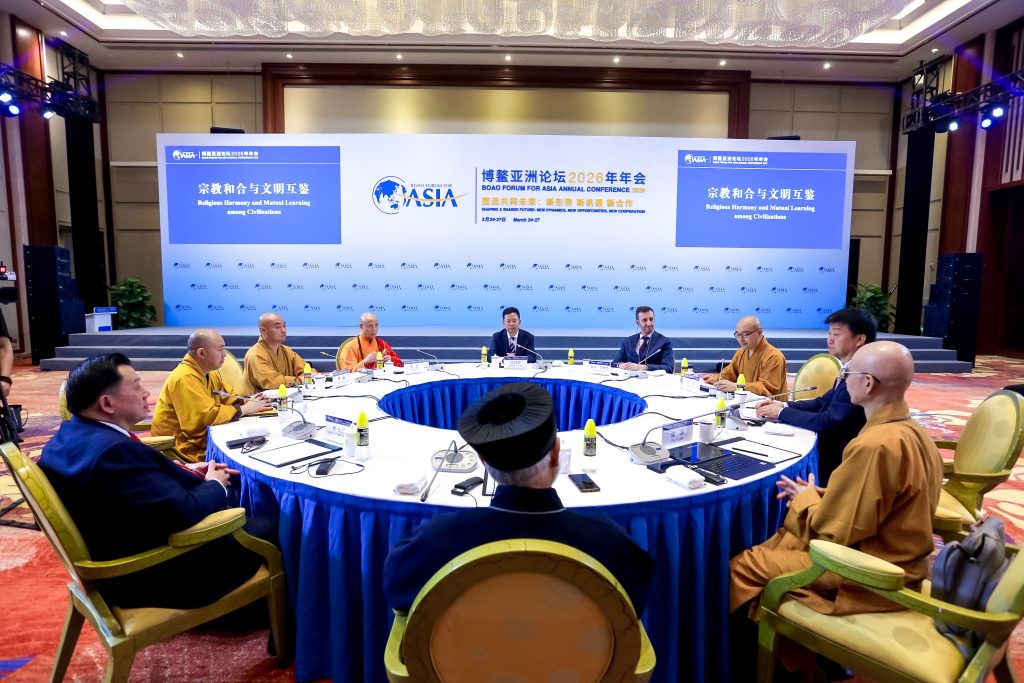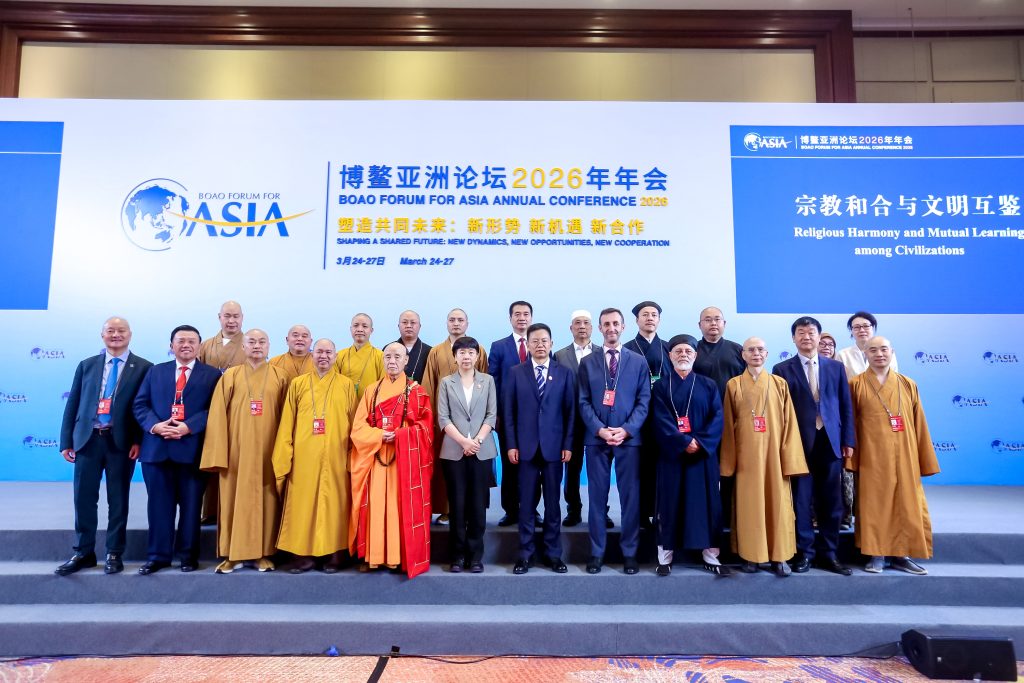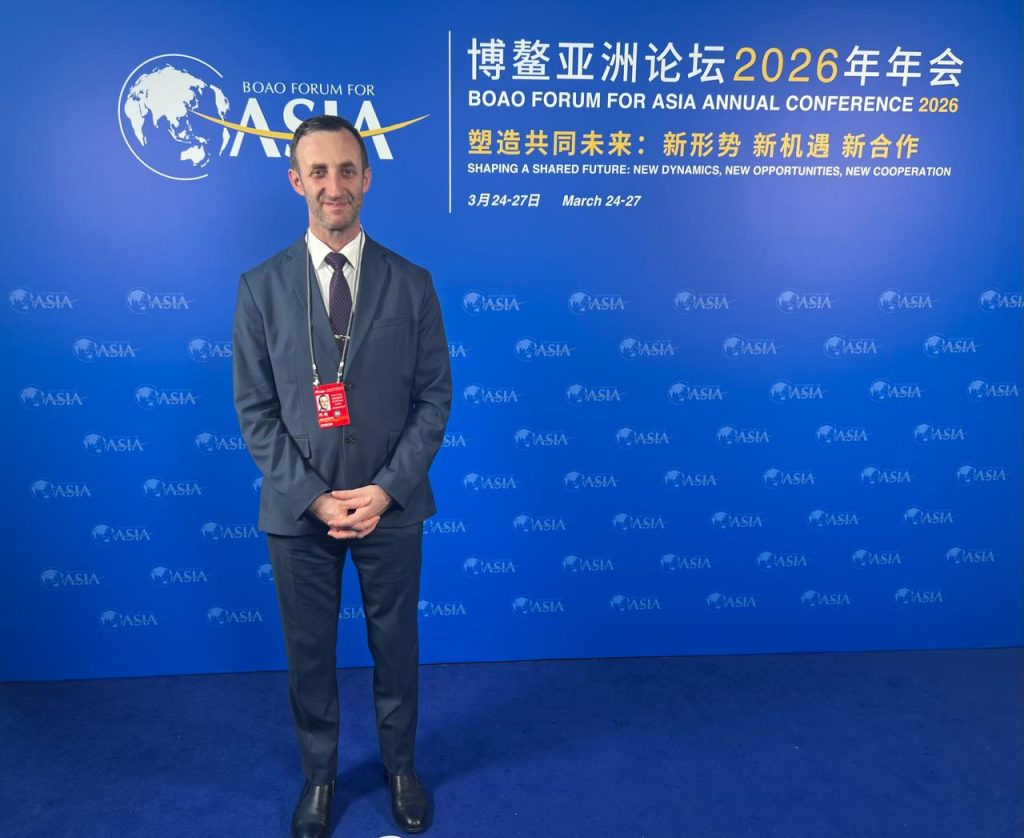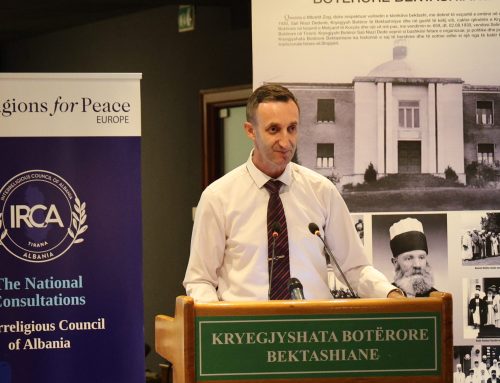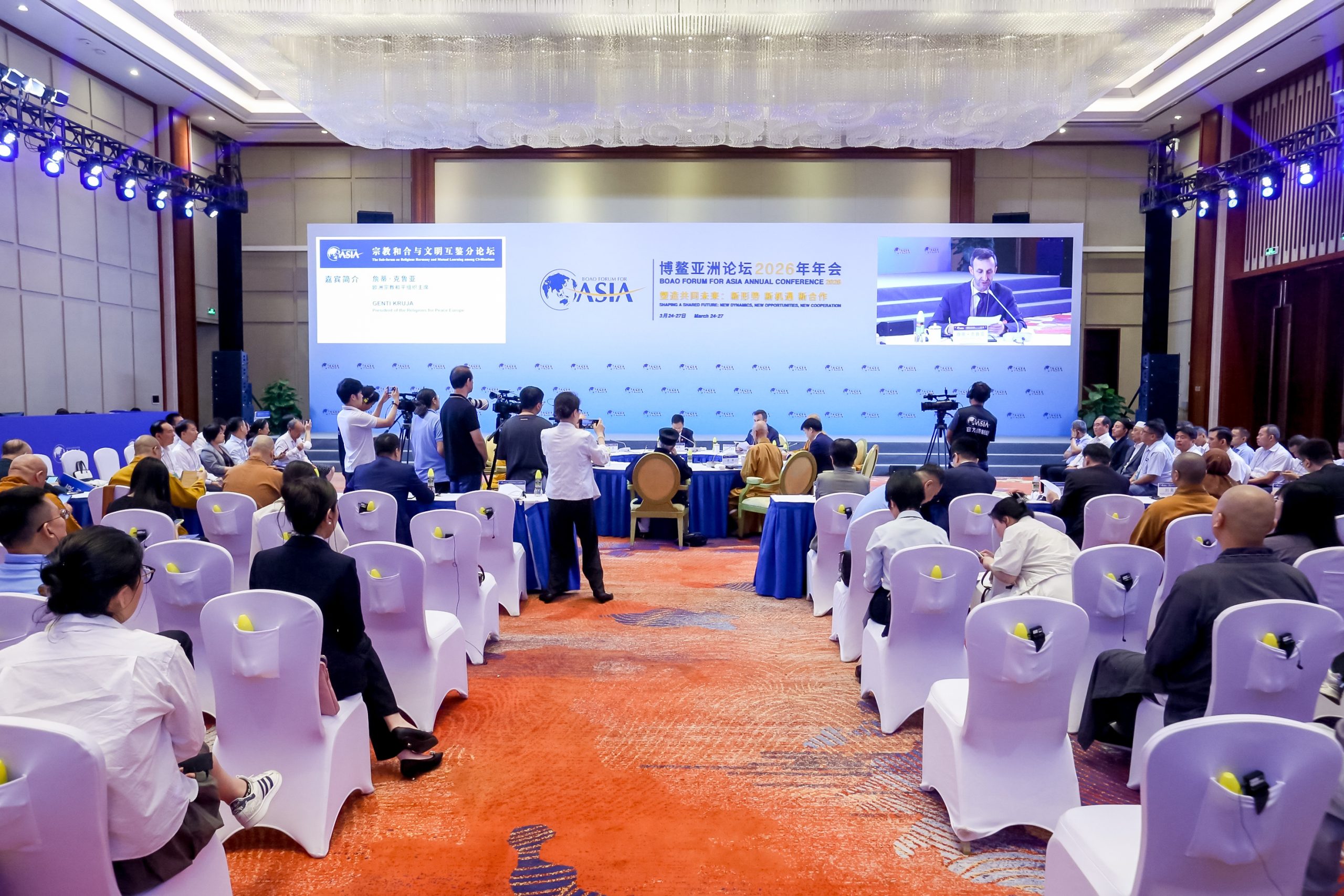
Boao, Hainan – The Annual Conference 2026 of the Boao Forum for Asia (BFA), held from March 23 to 27 in Boao, China, brought together political, economic, academic, and religious leaders from around the world to discuss global challenges and opportunities under the theme “Shaping a Shared Future: New Dynamics, New Opportunities, New Cooperation”.
As one of the most important international platforms for dialogue in Asia and beyond, the Forum continues to promote multilateralism and global cooperation. In this context, the Chairman of the Forum, Ban Ki-moon, emphasized the importance of strengthening international cooperation in addressing shared global challenges, highlighting Asia’s growing role in global economic development.
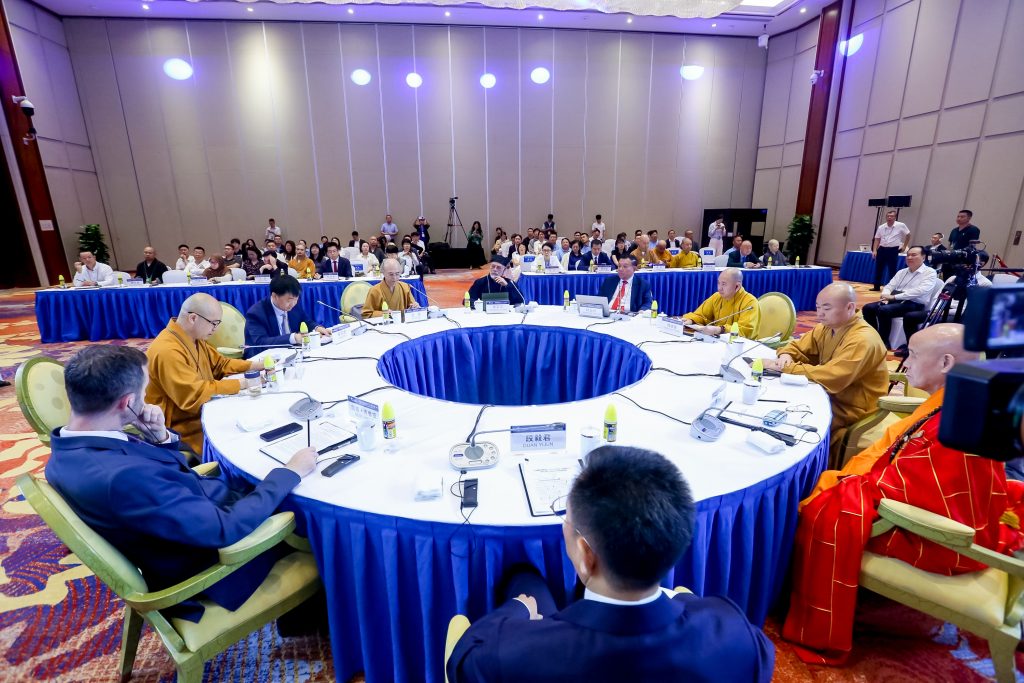
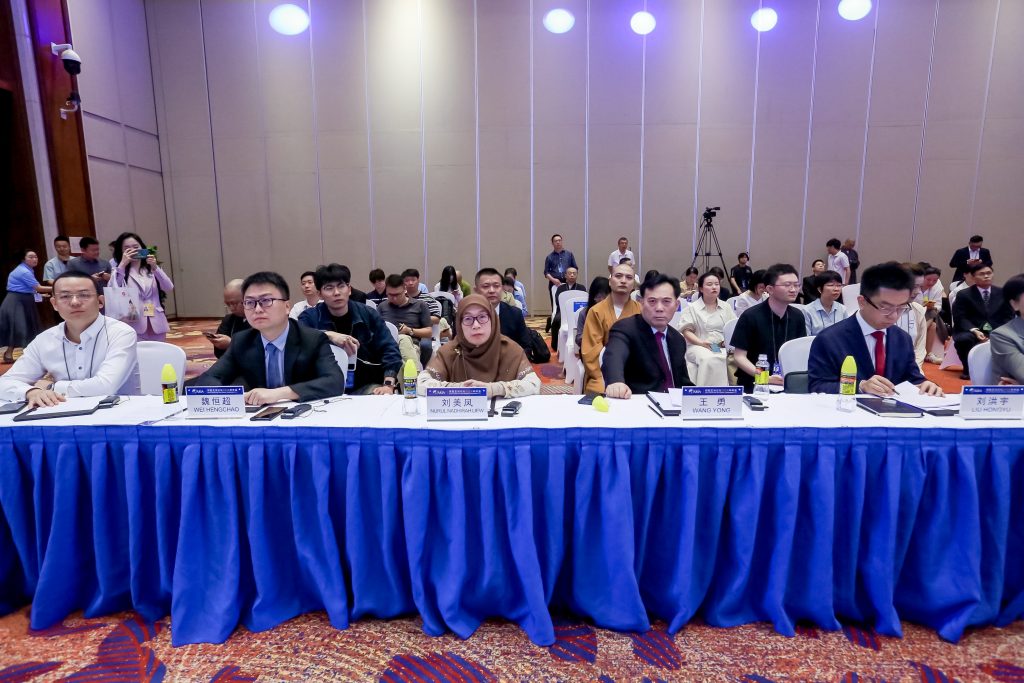
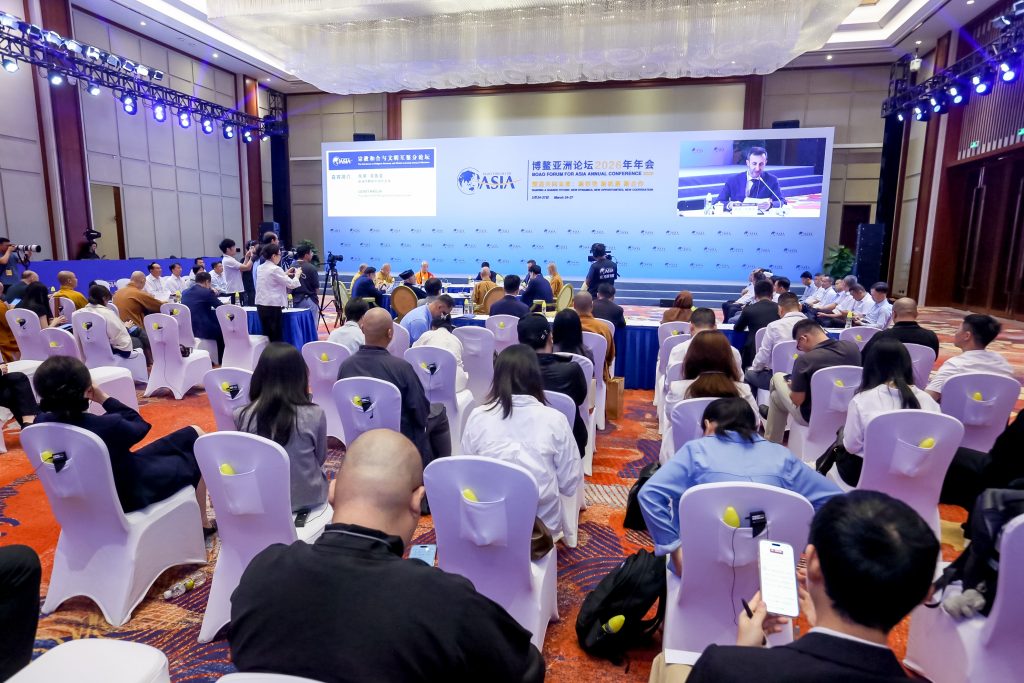
As part of the conference, the sub-forum on “Religious Harmony and Mutual Learning Among Civilizations” was held for the eleventh consecutive year, bringing together religious leaders, scholars, and experts from various traditions, including Buddhism, Taoism and Islam.
This year’s theme, “Mutual Reflection as Mirrors, Harmony and Co-prosperity-Practicing the Global Governance Initiative with the Wisdom of Religious Localization” was discussed in a roundtable format, aiming to promote interfaith dialogue as a practical tool for building a more just, peaceful, and sustainable global order.
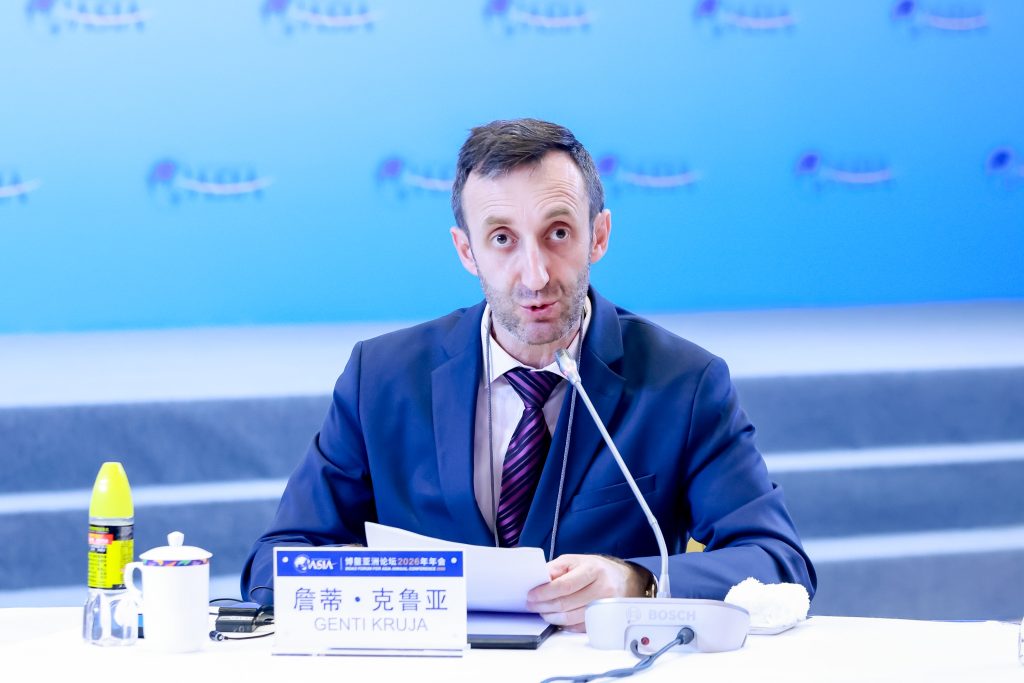
Among the distinguished speakers was Prof. Genti Kruja, President of Religions for Peace Europe, who presented on the topic: “Interreligious Cooperation and Global Governance: The Role of Interfaith Dialogue and the Albanian Model of Coexistence.”
In his address, Dr. Kruja underlined that today’s world is marked by multiple global crises, including armed conflicts, forced migration, violent extremism, and cultural polarization. In this context, he emphasized that religion and interfaith dialogue can play a constructive role:
“Today we live in a world marked by multiple global crises. Armed conflicts, forced migration, violent extremism, and cultural polarization continue to challenge international stability. This is precisely where religion and interfaith dialogue can play a constructive role.”
Referring to faith-based diplomacy, he noted:
“The goal is not only to stop conflict but also to rebuild relationships and foster reconciliation, contributing to sustainable peace.”
Dr. Kruja further stressed that interfaith dialogue is not merely a theological discussion, but a practical platform for cooperation:
“When religious communities work together, they can reduce tensions, prevent radicalization, and strengthen social cohesion.”
He also presented the global role of Religions for Peace, which operates in nearly one hundred countries through national interreligious councils and regional networks, contributing to conflict transformation, human development, environmental protection, and the strengthening of inclusive societies, while supporting the United Nations Sustainable Development Goals.
A significant part of his speech focused on the Albanian model of religious coexistence as a concrete example of interreligious cooperation in practice. He emphasized that in Albania, religious communities have lived together for centuries in a culture characterized by mutual respect and solidarity, where mosques and churches often stand close to one another.
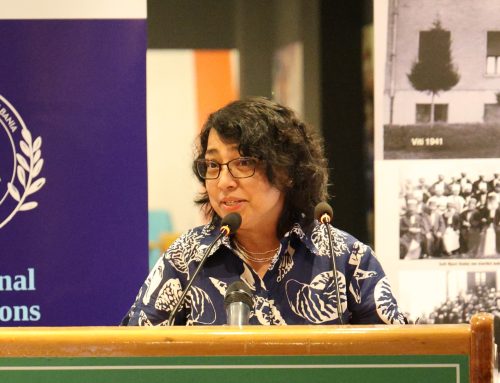
In this context, he highlighted the establishment of the Interreligious Council of Albania in 2007, which promotes dialogue through joint initiatives, educational projects, and engagement of youth and women.
In conclusion, Dr. Kruja stated: “Just as the Silk Road once connected civilizations, today dialogue among religions and cultures can serve as a modern bridge for peace, cooperation, and shared prosperity.”
“Religion and diplomacy should not be viewed as opposing forces. When guided by ethical values, mutual respect, and inclusive institutions, they can become complementary partners in building a more just, peaceful, and sustainable world.”
In the closing remarks of the sub-forum, Mr. Duan Yijun, President of the China Religious Culture Communication Association, emphasized that interreligious dialogue can serve as a “mirror” for mutual understanding, helping address the root causes of conflicts and contributing to global peace and development.
He added that transforming religious wisdom into global consensus can provide sustainable positive energy for harmony and shared prosperity worldwide.
The sub-forum was organized by the China Religious Culture Communication Association, China Committee on Religion and Peace (CCRP), and the Buddhist Association of China, in collaboration with the relevant institutions of Hainan Province.
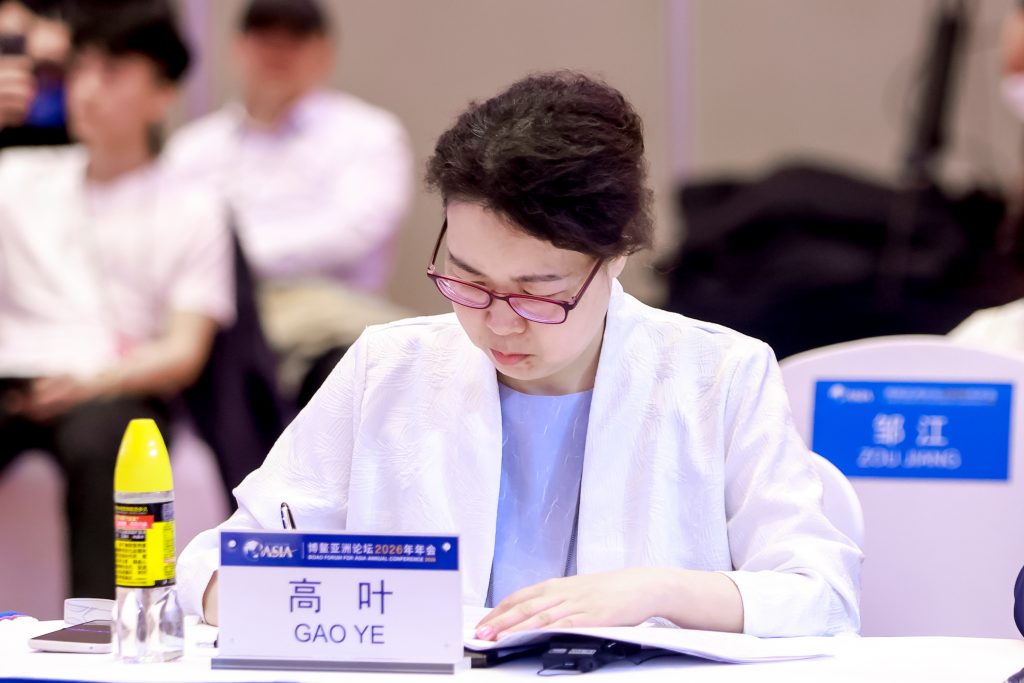
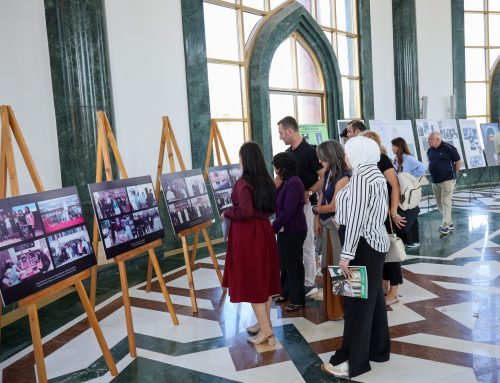
During his visit in Hainan, Prof. Genti Kruja, President of Religions for Peace Europe was received by Mrs. Gao Ye, Secretary General of the China Committee on Religion and Peace (CCRP), and her colleagues. As part of the program, they visited Buddhist and Taoist temples as well as community centers in Hainan. He also held meetings with representatives and leaders of the Muslim community of Hainan and Muslim Chinese of Malaysia, further strengthening interreligious understanding and cooperation.