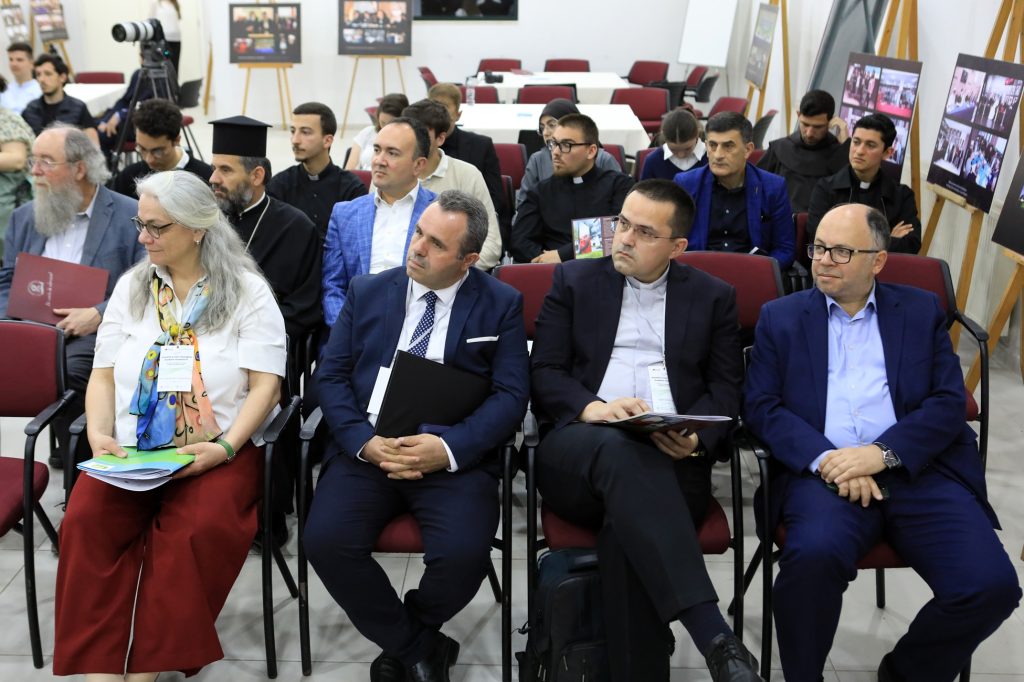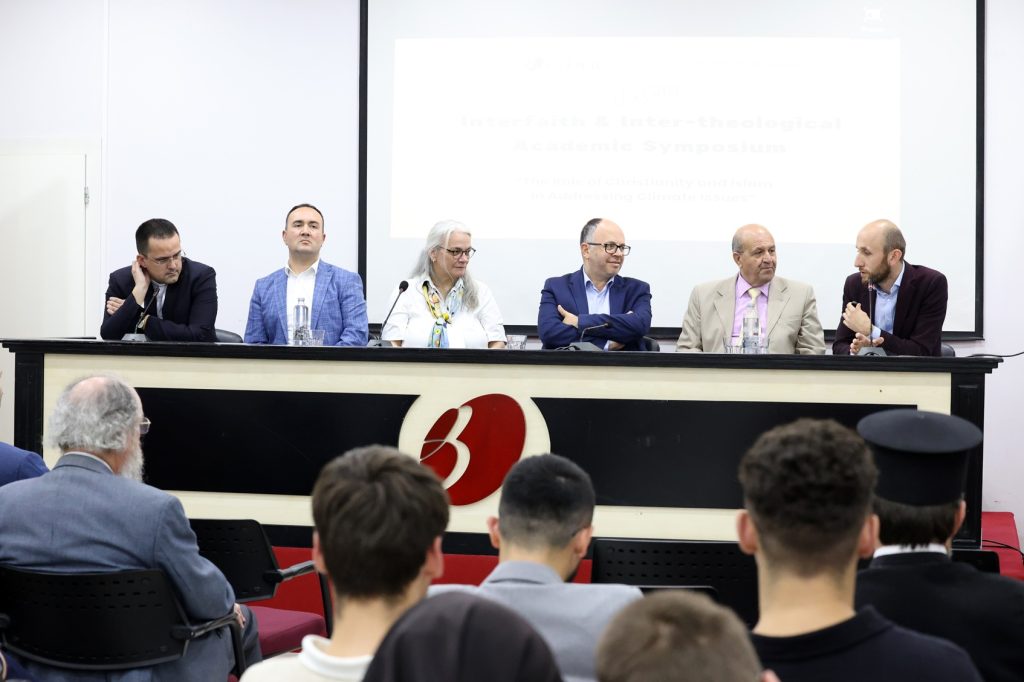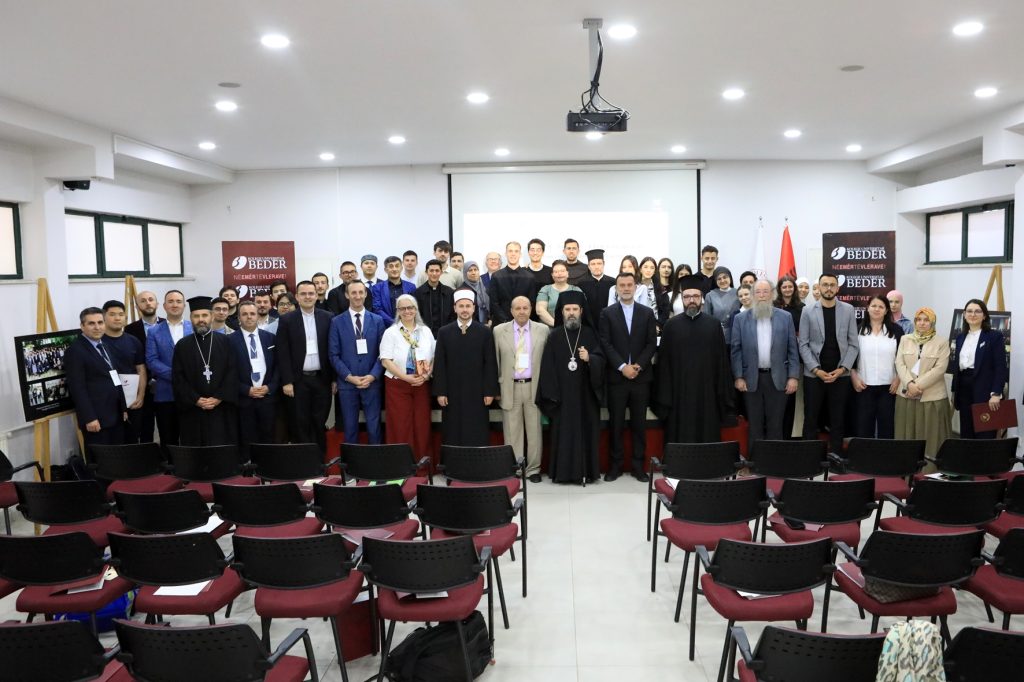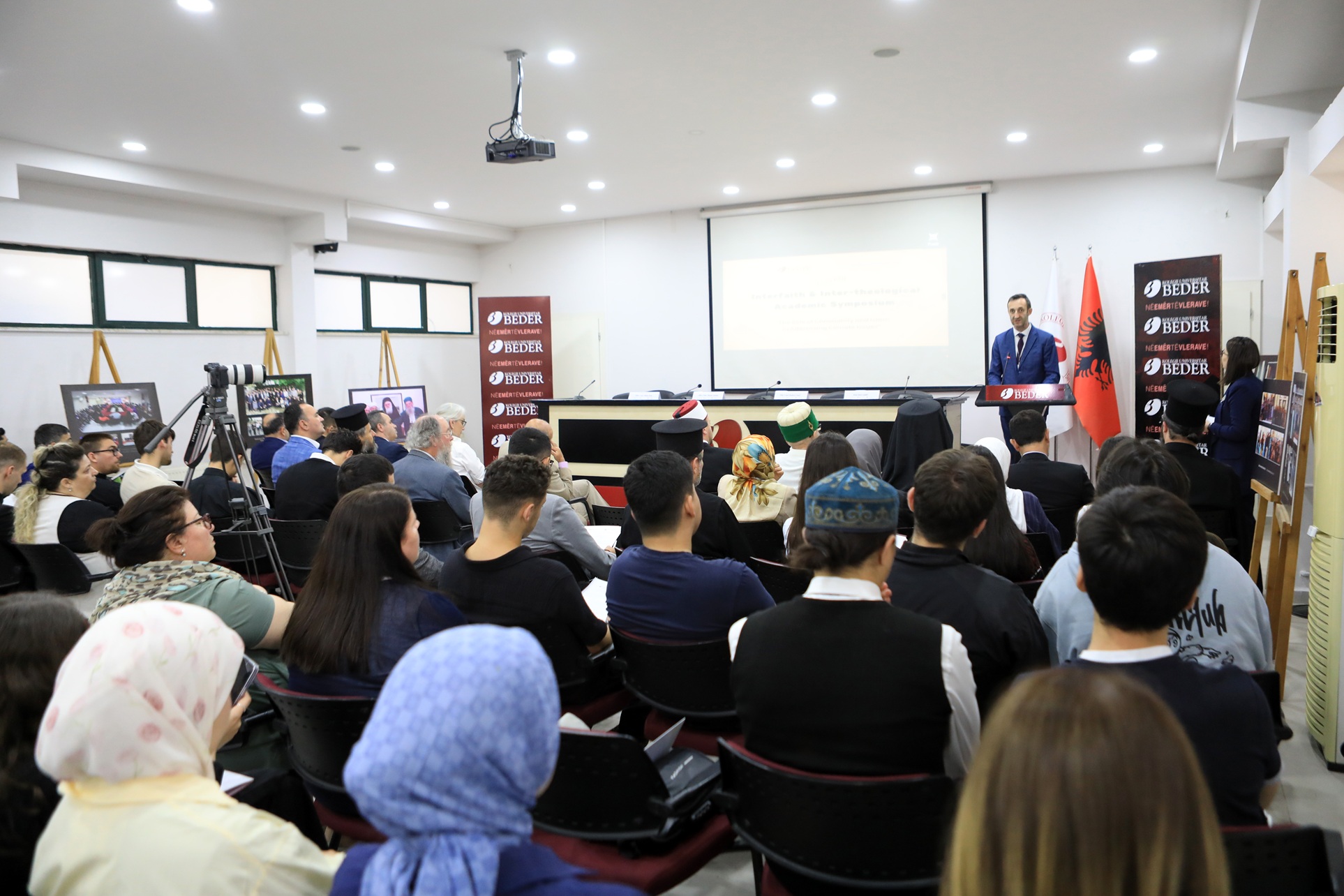
The 14th Interfaith and Inter-Theological Academic Symposium was held at Beder University College in Tirana, Albania under the theme “The Role of Christianity and Islam in Addressing Climate Issues”. The event brought together leaders of religious communities, academics, researchers, and students of Islamic and Christian theology on a common platform of dialogue and reflection on one of the most urgent challenges of our time.
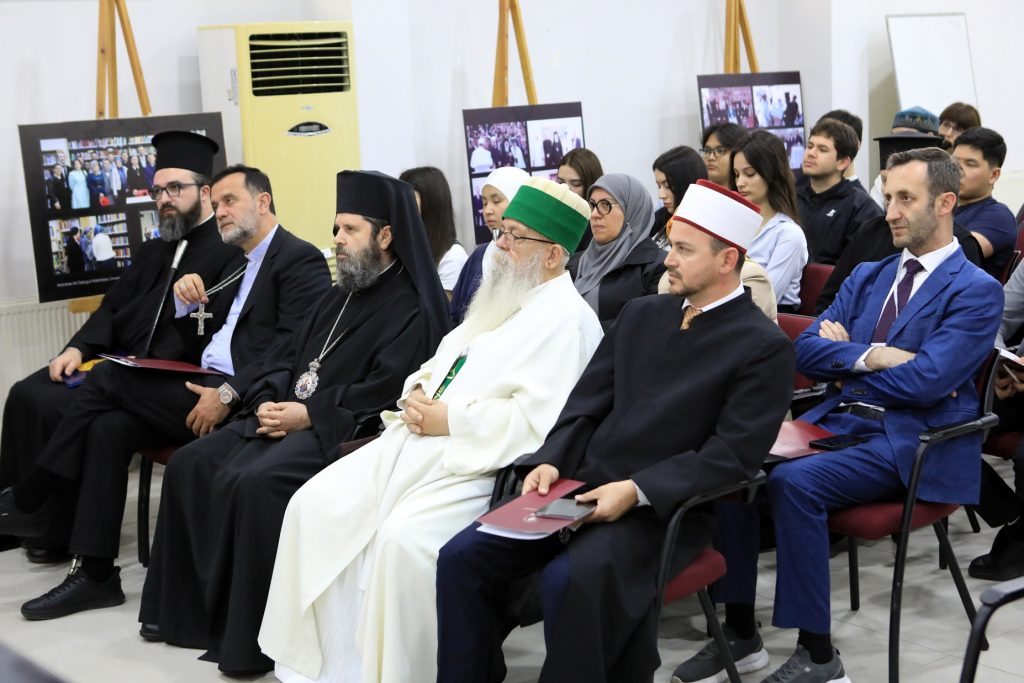
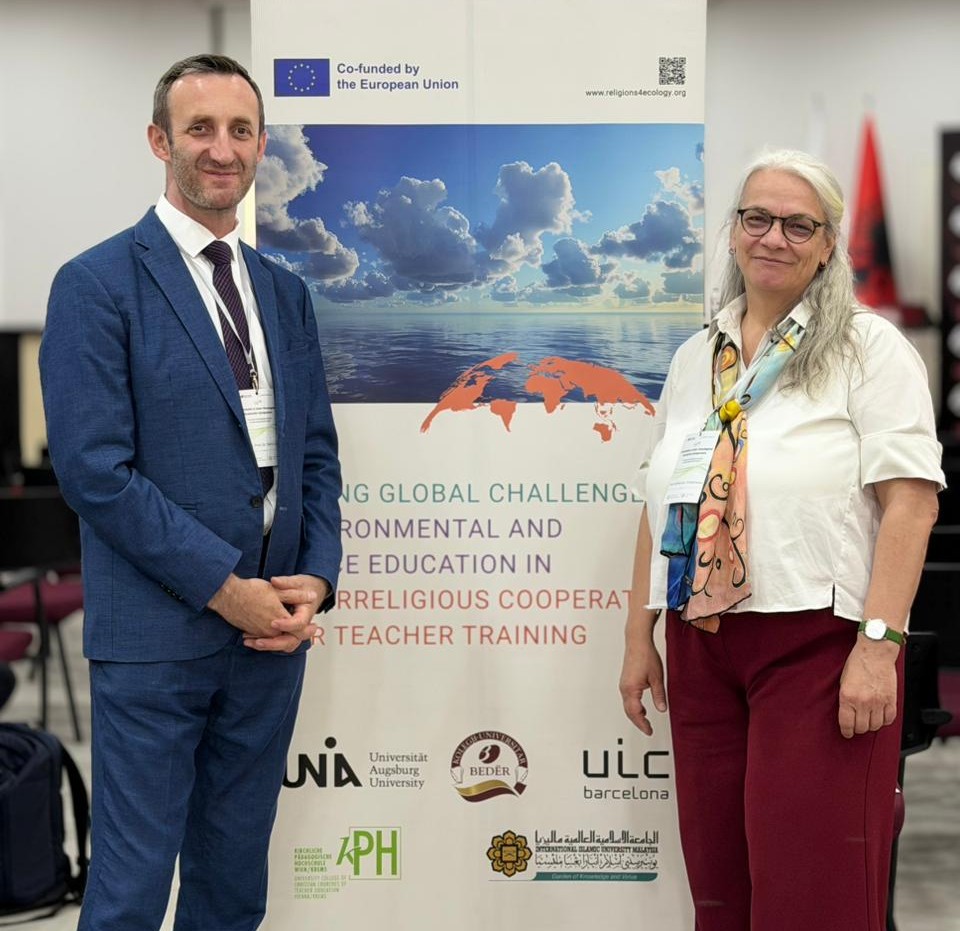
The symposium was organized within the framework of the Erasmus+ project “Facing Global Challenges, Environmental and Peace Education in Interreligious Cooperation for Religious Teacher Training”. It has become a consolidated tradition of inter-institutional cooperation and is jointly organized by three academic theological institutions in Albania: The Department of Islamic Sciences at Beder University College, the Department of Theology and Culture at Logos University College, and the Institute of Catholic Philosophy and Theology at the Interdiocesan Seminary. Following collaborations that began more than two decades ago, and the first symposium of this kind launched in 2015, the initiative has now reached 14 successful editions dedicated to interreligious dialogue and socially relevant issues.
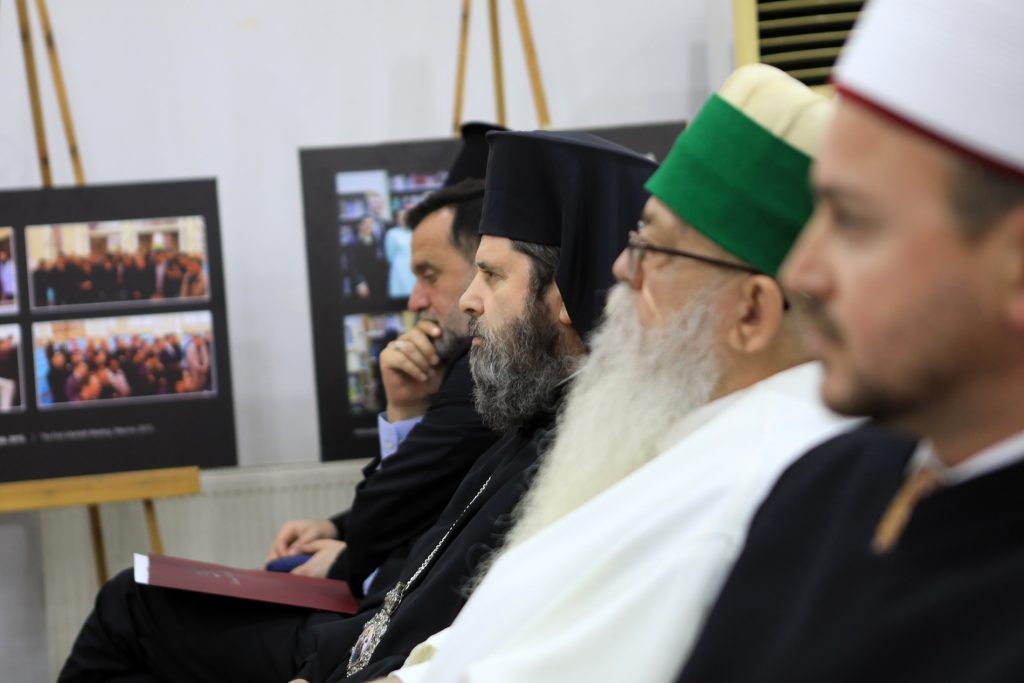
The opening ceremony began with a documentary highlighting years of academic cooperation, produced with the support of the European Union’s GERIS programme. Greetings were delivered by Prof. Gjergji Sinani, rector of University College Beder, His Beatitude Ioan, Archbishop of the Orthodox Autocephalous Church of Albania; Mons. Gjergj Meta, President of the Catholic Bishops’ Conference of Albania; H. Dede Edmond Brahimaj, World Leader of the Bektashi World Headquarters; and Assoc. Prof. Dr. Genti Kruja, Director of Research Center for Sustainable Development and Dialogue at University College Beder and President of Religions for Peace Europe.
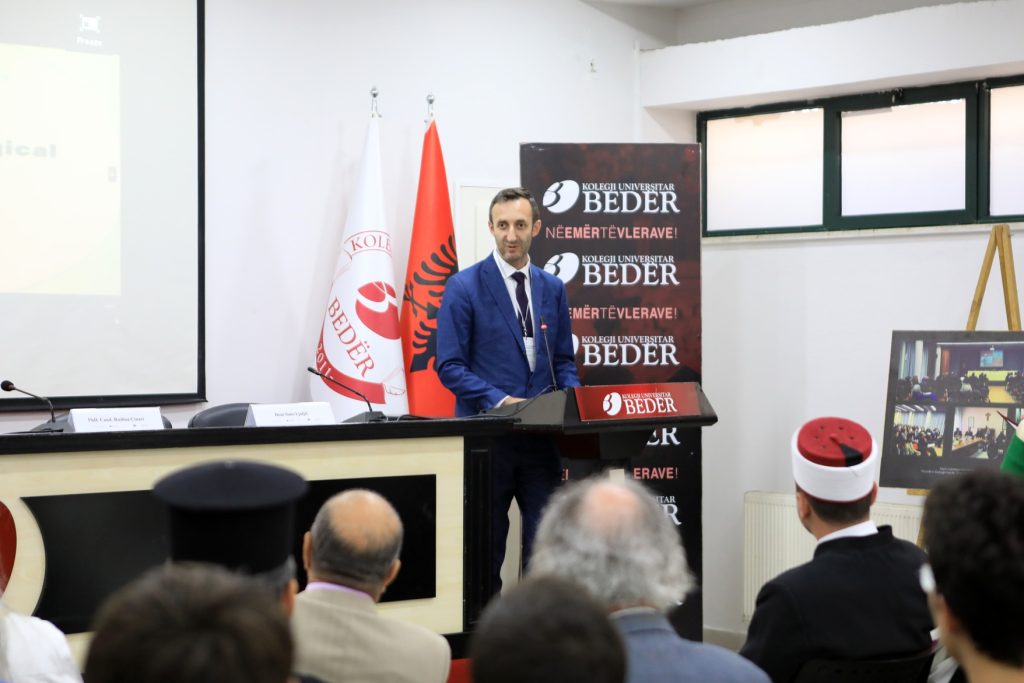
In his remarks, Prof. Kruja emphasized that climate change is not only an environmental or economic challenge, but also a moral, spiritual, and human one, requiring common responses rooted in solidarity, responsibility, and respect for creation. He underlined that religious traditions offer important values such as care, moderation, and justice, which can contribute to building a more sustainable future.
The keynote speaker was Prof. Sylvia Inou Tchatchoua from the University College of Christian Churches of Teacher Education in Vienna, Austria who shared international perspectives on interreligious education and ecological responsibility.
The scientific session followed with contributions from Thoma Çomëni, Logos University College, Fr. Simo Ljuljić, Director of the Institute of Catholic Philosophy and Theology, and Rudina Çinari from Beder University College. Their presentations addressed environmental protection and ecological challenges from theological and ethical perspectives.
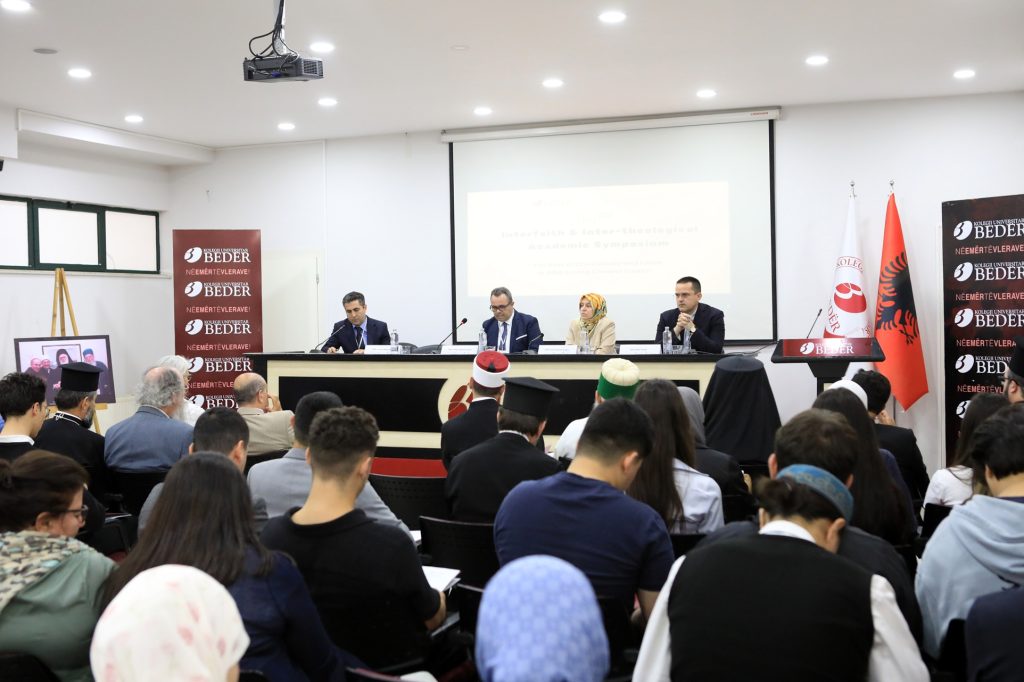
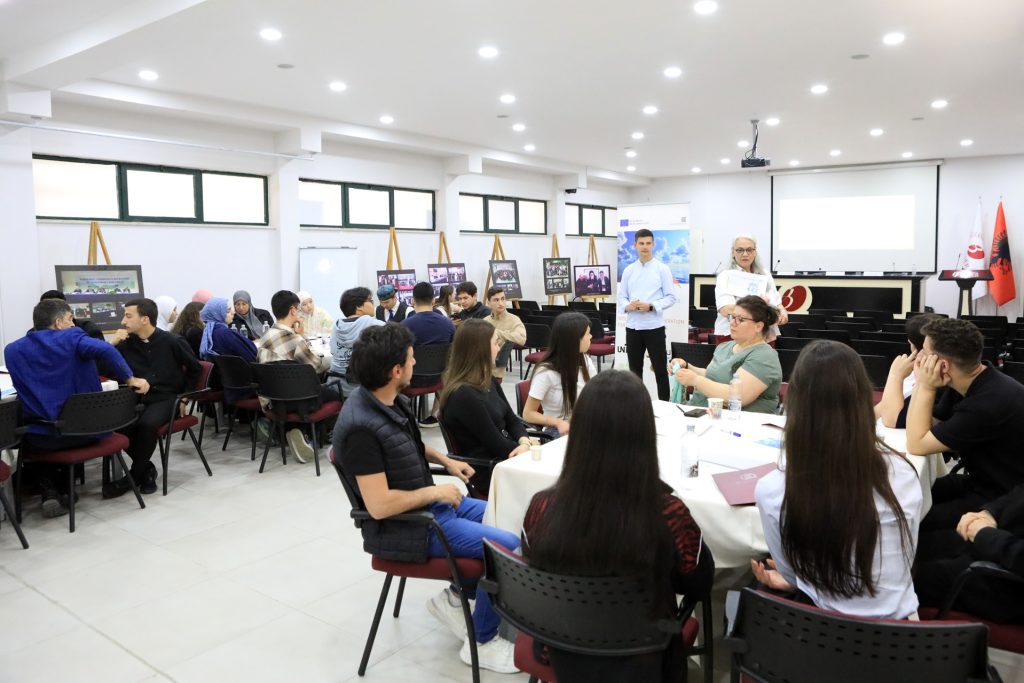
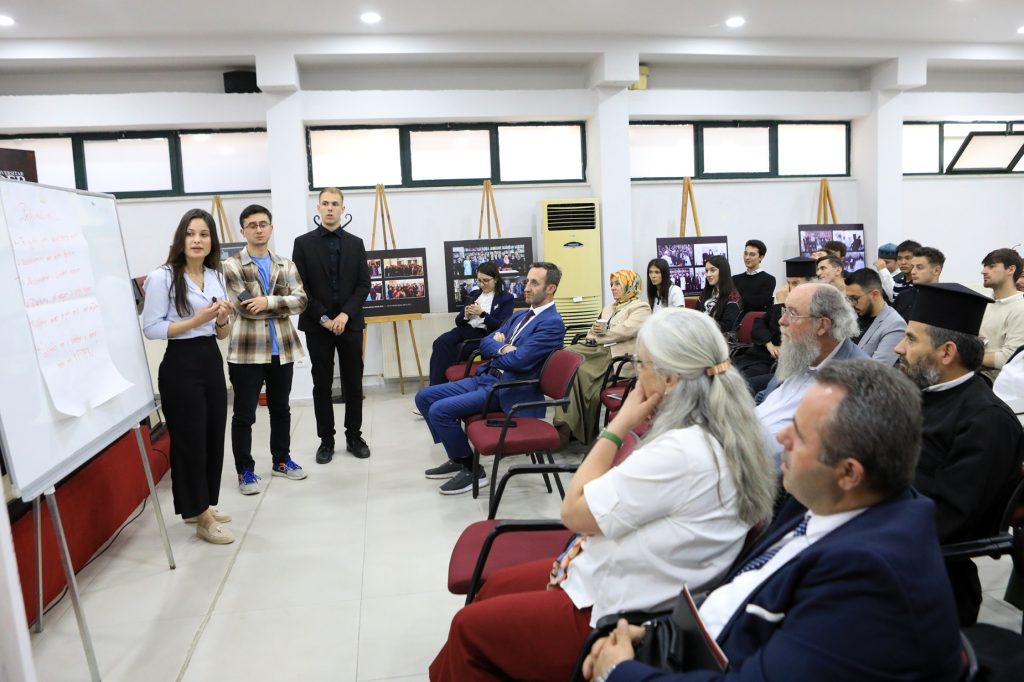
A distinctive feature of this year’s edition was the interactive student workshop format led by Sylvia Inou Tchatchoua, where students from the three theological institutions collaborated in working groups and presented their ideas on the role of religion, education, and civic responsibility for climate action.
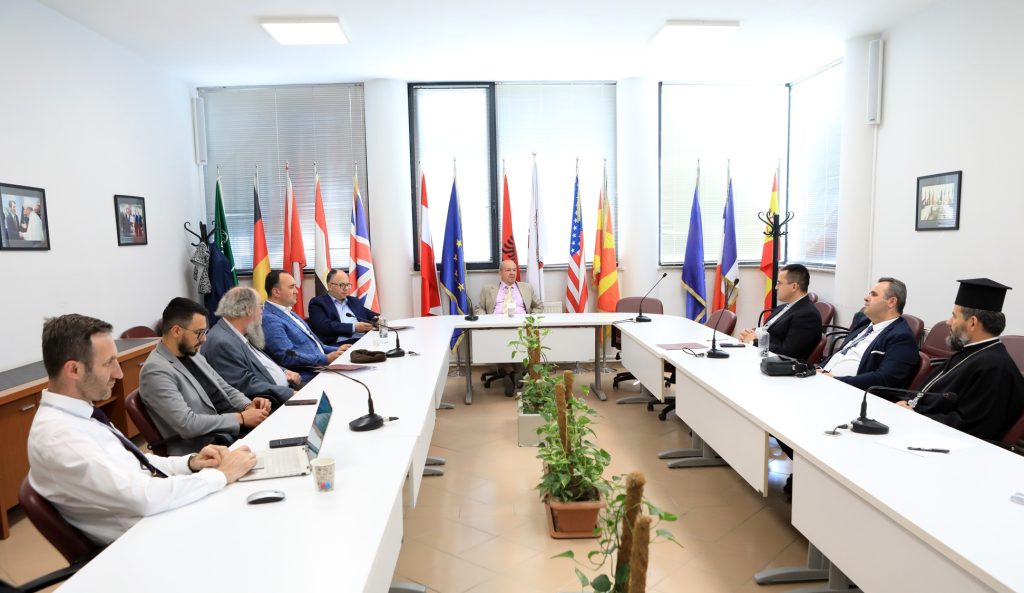
During discussions with academic staff, it was highlighted that this cooperation among the three institutions represents a unique Albanian model that should be preserved, documented, and promoted internationally. New initiatives were proposed, including joint academic publications and future themes such as social justice, artificial intelligence, migration, and ethical responsibility.
As part of the symposium, an exhibition was also inaugurated showcasing interfaith cooperation among religious communities and the academic institutions established by them.
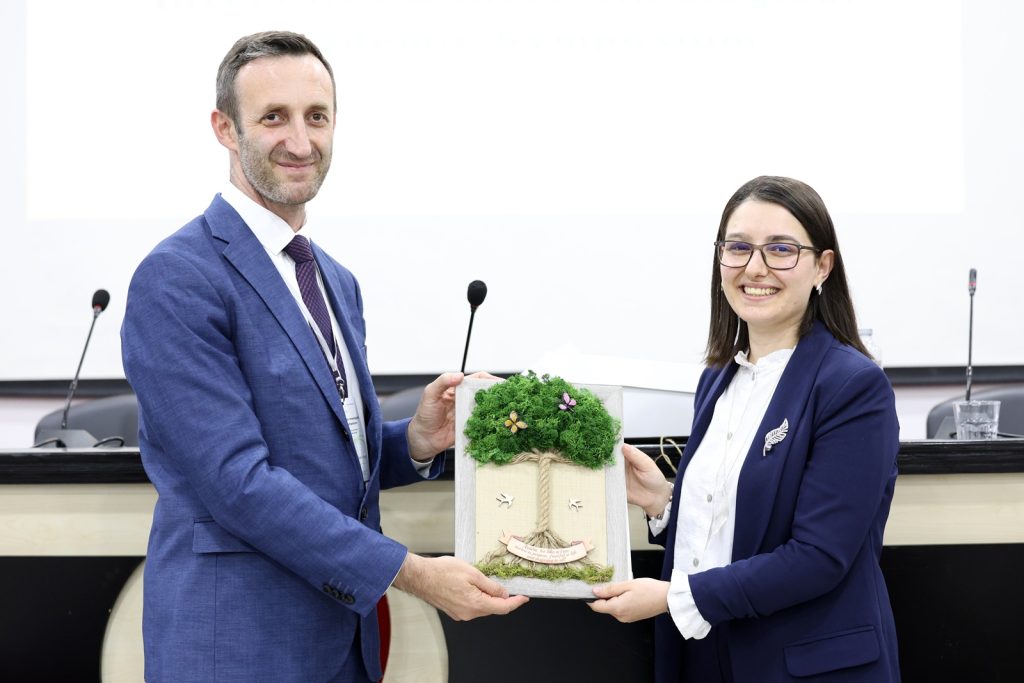
At the closing ceremony, participants received certificates, while prizes were awarded to the winners of a competition organized at the conclusion of the symposium. Participants emphasized that interreligious dialogue could contribute not only to peace among people, but also to peace with nature and the building of a more sustainable future for generations to come./29 April 2026