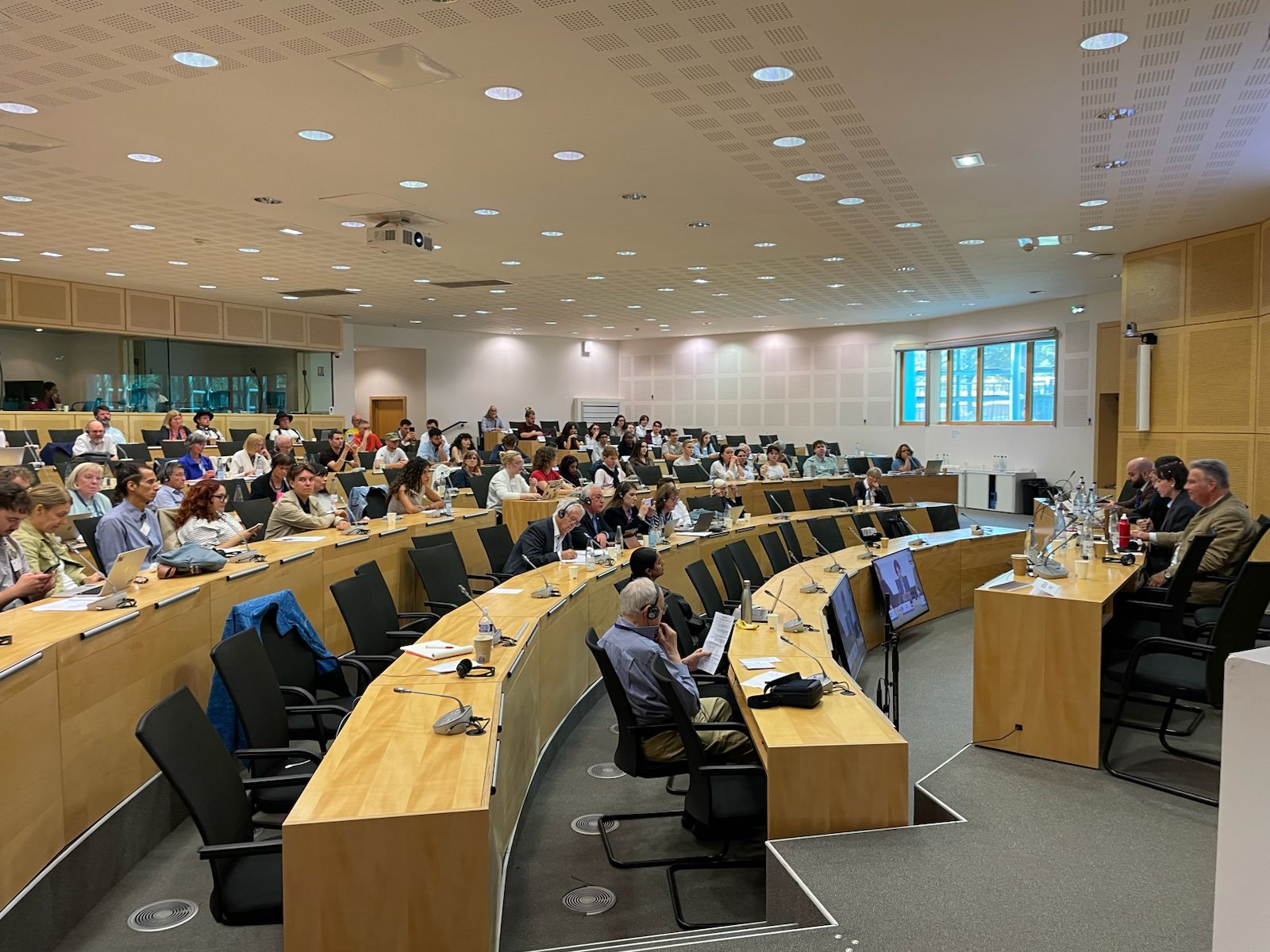
STRASBOURG, France – Religions for Peace Europe participated in the Council of Europe’s Conference of International Non-Governmental Organisations (INGOs), held from 28 September to 2 October 2026. The meetings at the Agora Building and accompanying events brought together civil society representatives to discuss human rights, civic participation, peace and the future of European cooperation, while marking the Conference’s 50th anniversary.
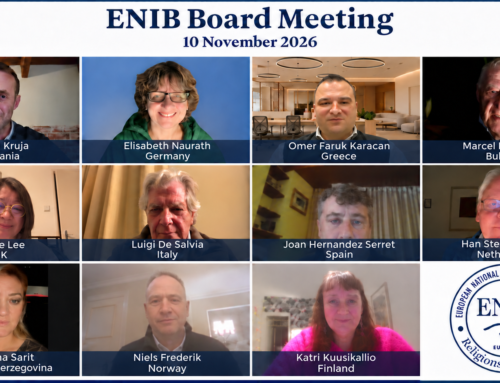
 At Monday’s session, Prof. Genti Kruja, President of Religions for Peace Europe, Prof. Dr. Elisabeth Naurath, President of RfP Germany and Omer Faruk Karacan, Secretary of ENIB participated online. Han Steijnebrugh, the new Chair of Religions for Peace Netherlands, attended in person as the delegated representative of RfP Europe. He particularly valued space for religion and interreligious dialogue within the Council of Europe’s work.

Civil society and interreligious cooperation
Discussions addressed the role of civil society within the Council of Europe’s Quadrilogue and opportunities for strengthening interreligious and interconvictional cooperation. For RfP Europe, the exchanges offered insights into its pursuit of participatory status and the importance of documenting practical examples of dialogue, education and conflict prevention.

Participants explored proposals for future committees and the possibility of a permanent platform for religions within the Council of Europe. The discussions highlighted the need for clear objectives, diplomatic engagement and attention to communities and individuals whose voices are often overlooked.
Education, training and ethical guidelines for dialogue emerged as important areas for further cooperation. Steijnebrugh also joined a brainstorming group of around twelve participants interested in developing a proposed Peace Committee. Their exchanges focused on preventing violence, addressing hatred and discrimination, and strengthening social cohesion through dialogue. A mailing list was established to support further development of the proposal.
Youth participation and dialogue across divides
 More than 30 young people participated in the conference, an aspect Steijnebrugh described as particularly heartwarming. The programme included a dedicated exchange with documentary filmmaker Deeyah Khan, a screening and discussion of her work, and a special youth event.
Khan’s documentary White Right: Meeting the Enemy prompted reflection on empathy, listening and engagement with people holding extremist views. In a personal conversation with Khan, Steijnebrugh explored whether elements of her approach could be taught through training. They agreed to remain in contact and explore the possibility further. He also noted the young participants’ connections with Khan and their enthusiasm for becoming involved in her work.
The programme additionally featured Along the Way, followed by a discussion with the filmmakers and protagonists. For Steijnebrugh, the film highlighted the importance of enabling refugees to tell their own stories and of supporting education and safe spaces for those affected by displacement and trauma.
Launch of the Interfaith Art and Photography Competition
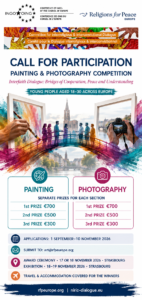 The conference also provided an opportunity to highlight the launch of RfP Europe’s Interfaith Art and Photography Competition, organised in cooperation with the Committee for Interreligious and Interconvictional Dialogue of the Council of Europe’s Conference of INGOs. Under the theme “Interfaith Dialogue: Bridges of Cooperation, Peace and Understanding”, the initiative invites young people aged 18–30 to express their perspectives on coexistence, diversity and peace through painting and photography.
Full competition details: https://rfpeurope.org/interfaith-art-and-photography-competition/
Building relationships for future engagement
Participants also attended a reception at Strasbourg City Hall, in a historic setting associated with the beginnings of the Council of Europe in 1949. The welcome remarks highlighted Strasbourg’s European heritage and its connection with the French national anthem, La Marseillaise. RfP Europe’s participation identified practical opportunities for contributing its interreligious experience to European civil society discussions, particularly through peace education, grassroots dialogue and youth engagement.