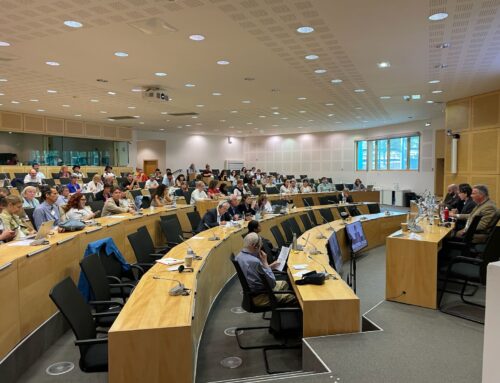
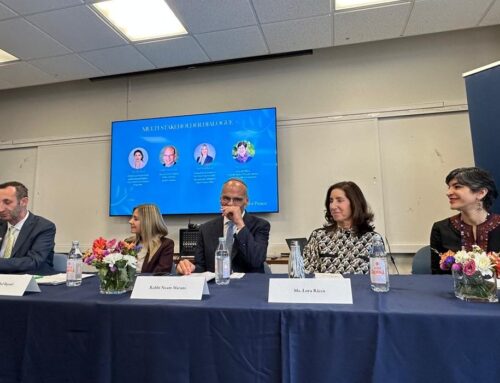
Augsburg, Germany, 8 October 2026 – The University of Augsburg hosted the final conference on Interreligious Education for Sustainable Development (irESD), bringing together international project partners to present the results of the Erasmus+ Religions for Ecology project and discuss their application in teacher education and community life.
Held at the university’s Climate Resilience Centre, the conference explored how interreligious learning can contribute to environmental responsibility, sustainable development and peace. It marked an opportunity to share educational resources and consider how cooperation developed through the project can continue.
The Erasmus+ project, “Facing Global Challenges: Environmental and Peace Education in Interreligious Cooperation for Teacher Training,” connects religious perspectives on ecological responsibility with practical approaches to education. Its objectives include integrating nature and climate protection, climate resilience and climate justice into teacher training, while encouraging shared ethical awareness and action.
Led by the University of Augsburg, the partnership brings together institutions from five countries: Germany, Austria, Spain, Albania and Malaysia. These include the University College of Christian Churches Teacher Education Vienna/Lower Austria, Universitat Internacional de Catalunya, Bedër University College in Tirana, and the International Islamic University Malaysia.
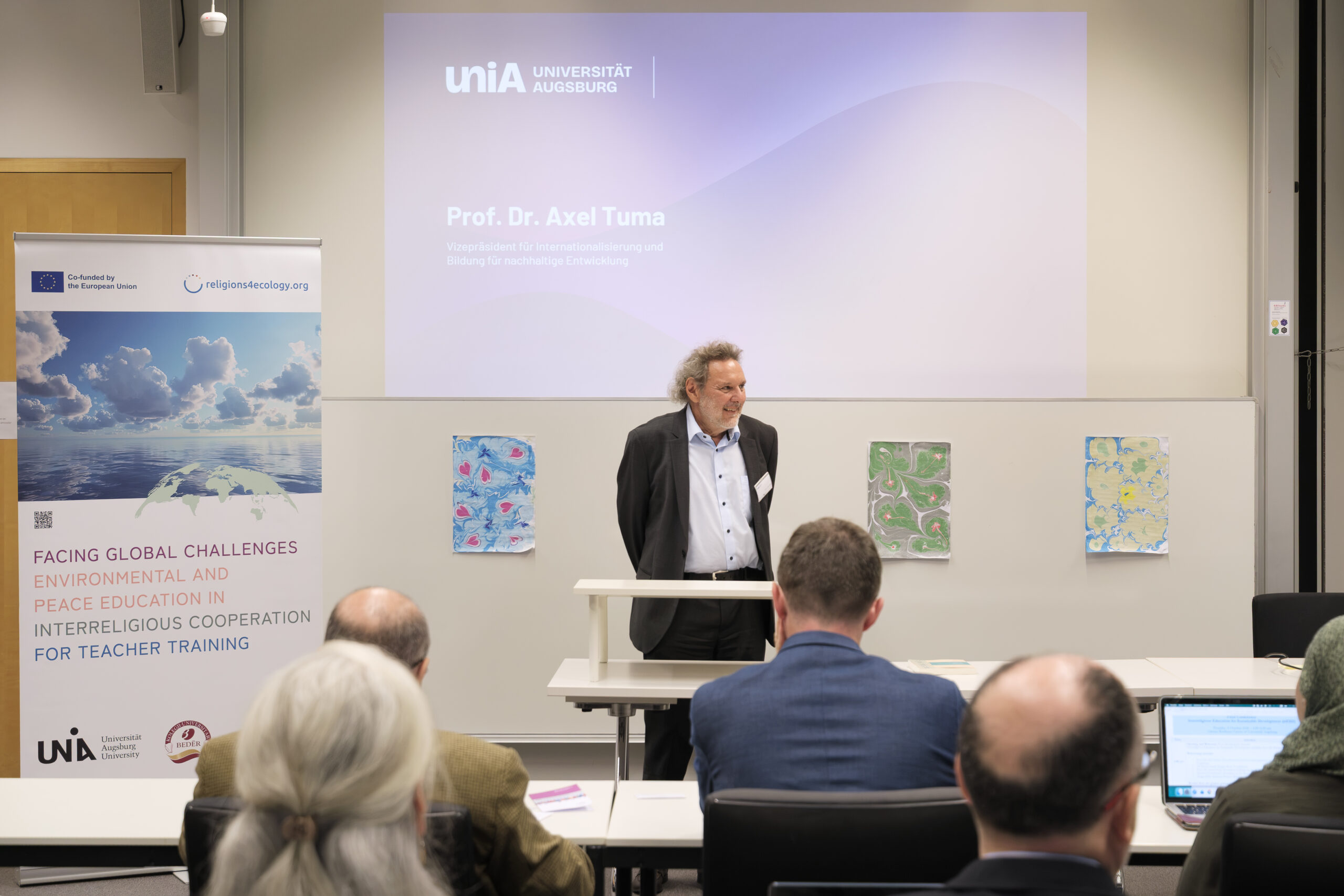
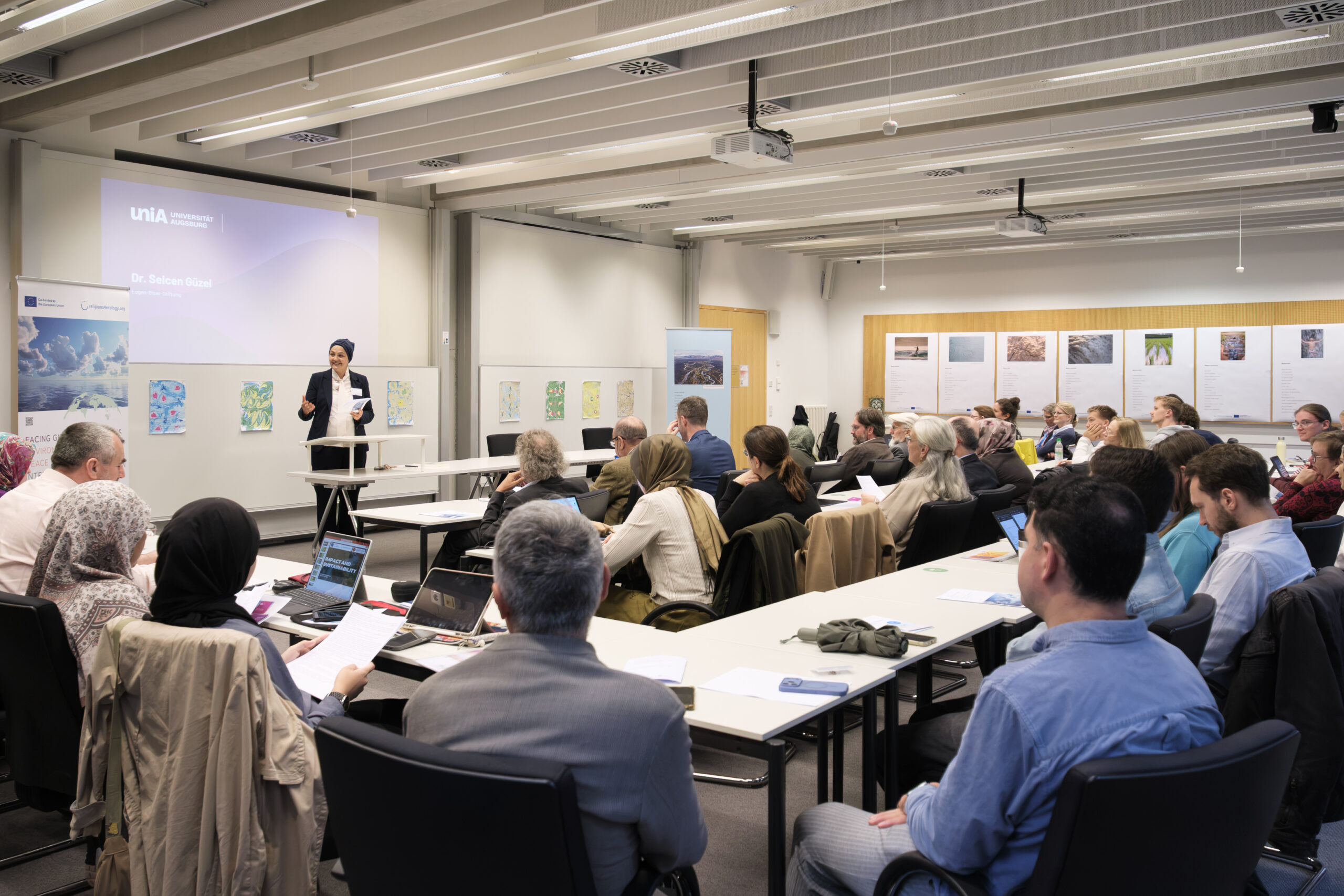
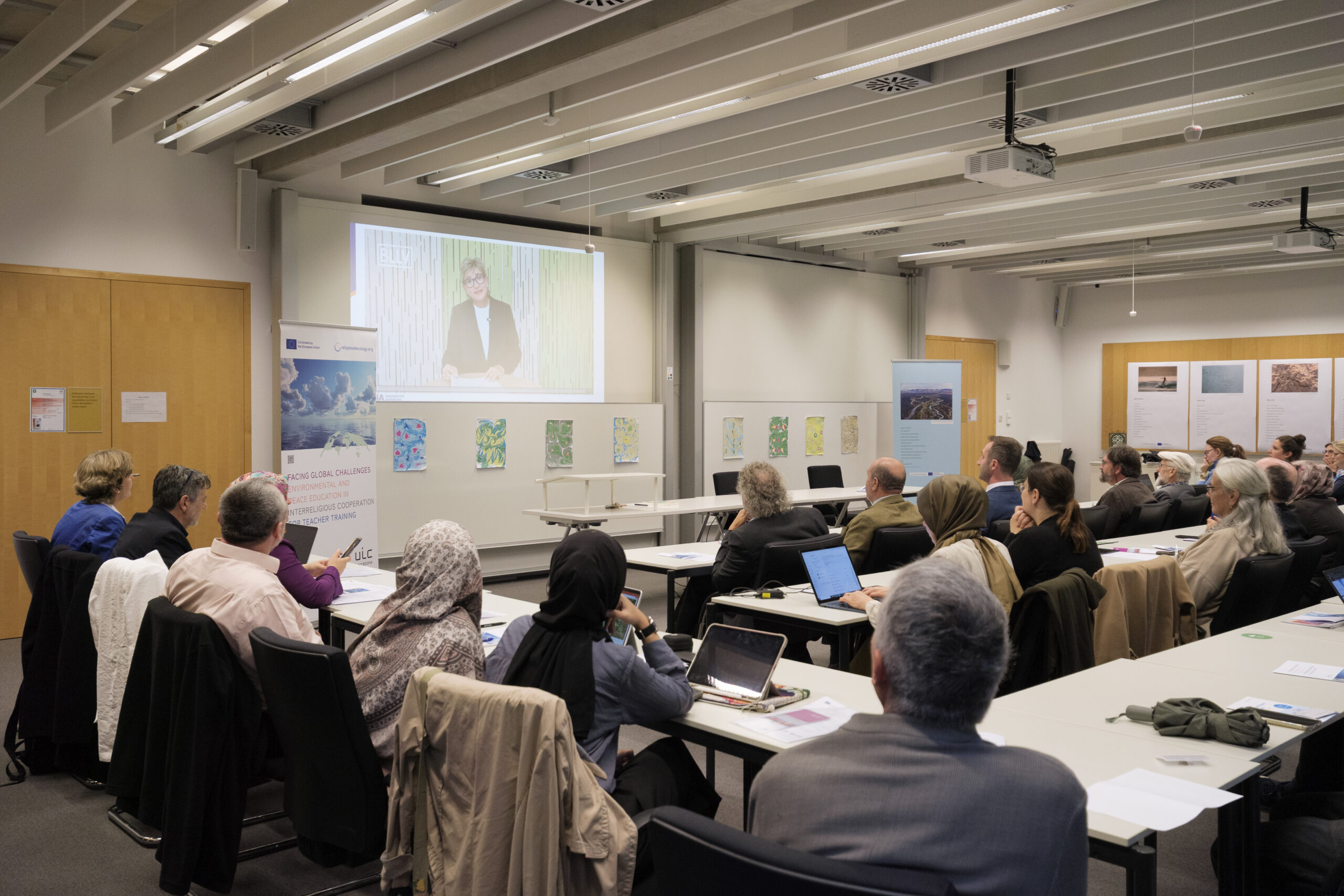
The conference opened with an introduction by Prof. Dr. Elisabeth Naurath, President of Religions for Peace Germany. Welcoming remarks were delivered by Prof. Dr. Axel Tuma, Vice-President for Internationalisation and Sustainability at the University of Augsburg; Dr. Selcen Güzel of the Eugen Biser Foundation; Prof. Genti Kruja, President of Religions for Peace Europe; and Simone Fleischmann, President of the Bavarian Teachers’ Association.
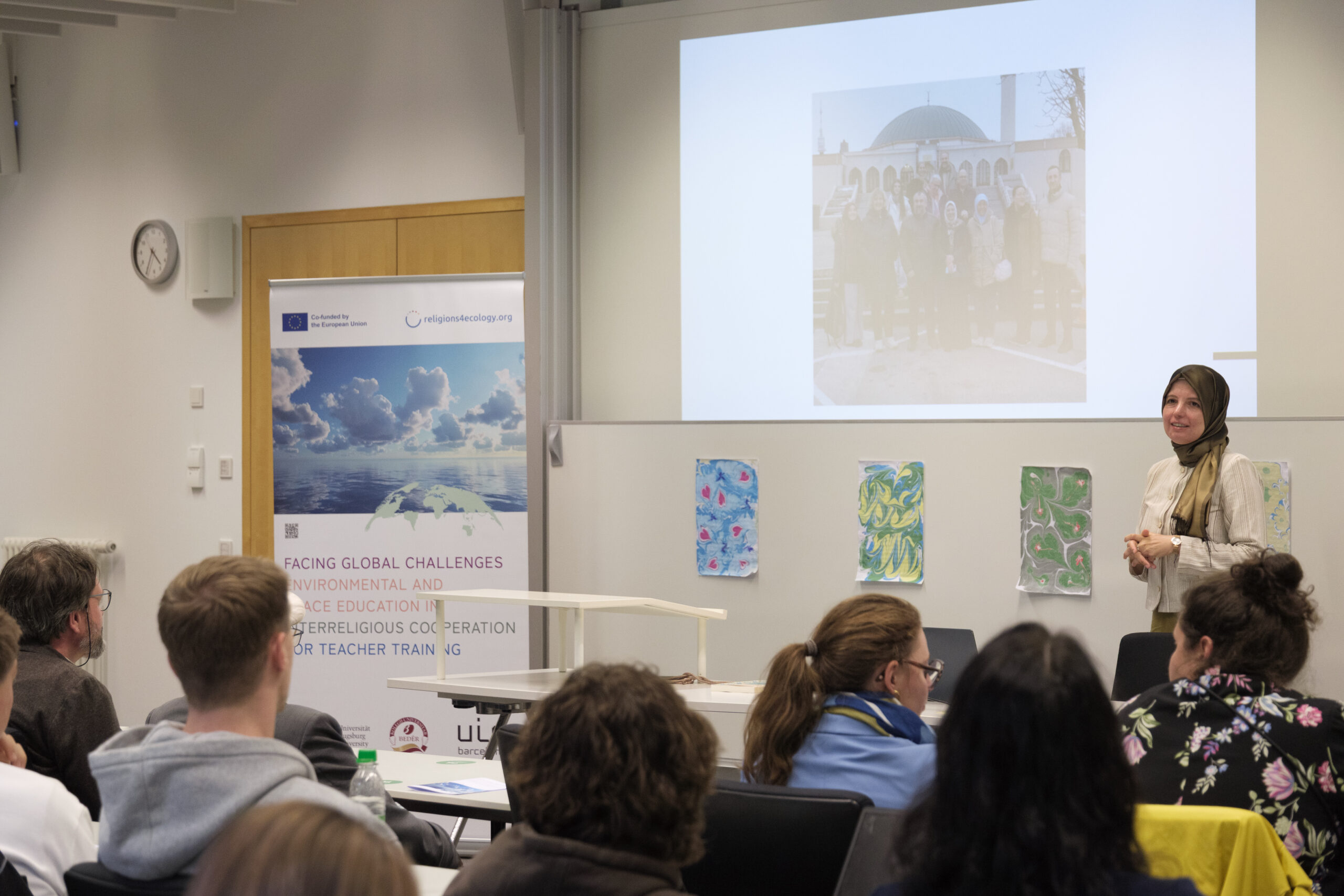
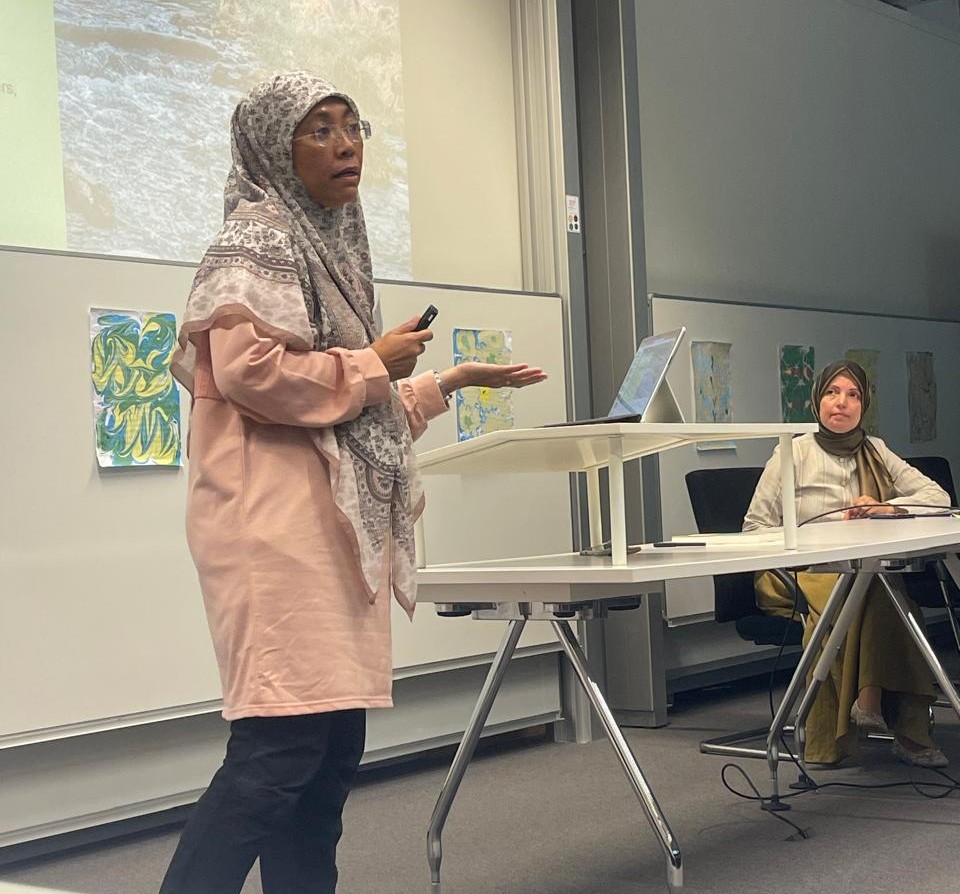
Project partners presented results from their respective countries in a session moderated by Prof. Elif Medeni. The programme also featured a project film, student perspectives, reflections from the Karlsruhe conference, and teaching materials, including a handbook and online resources. Discussions addressed how these outcomes could support teacher education and be introduced into the youth work of church and mosque communities.
In her presentation, Prof. Dr. Elisabeth Naurath emphasised that interreligious education must move beyond mutual understanding towards shared action for the common good. “We will only be able to solve these great global crises together – not alone, and certainly not against one another,” she stated. She highlighted the project’s potential to offer young people hope through cooperation and stressed the importance of integrating environmental ethics into teacher education. She also identified Religions for Peace as an important network for bringing the project’s findings into society and turning them into practical initiatives.

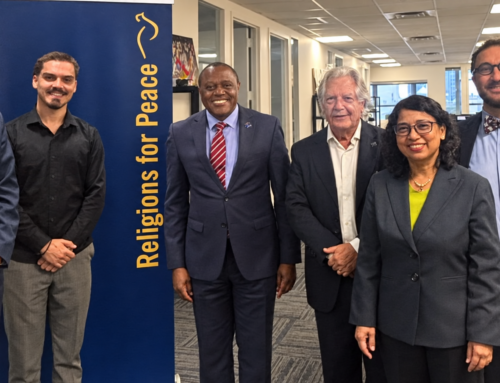
In his welcoming remarks, Prof. Kruja, representing Religions for Peace Europe, emphasised the importance of connecting faith, education and responsibility for the environment. He thanked the hosts and international partners, acknowledging in particular Prof. Naurath’s contribution to interreligious cooperation through Religions for Peace Germany.
“Together, these networks help turn dialogue into practical action”, he stated, referring to Religions for Peace Europe’s cooperation across its national interreligious bodies, religious leaders, youth and women’s networks. He also highlighted care for water, rivers, lakes and shared natural heritage as a responsibility towards one another and future generations.
The closing session linked education with practical solidarity through The Well Project and a fundraising appeal involving Prof. Dr. Imran Schröter and Prof. Kruja.
For Religions for Peace Europe, the conference provided a valuable occasion to strengthen connections between academic institutions and interreligious networks, supporting the continued use of the project’s educational resources in schools, universities and religious communities.